

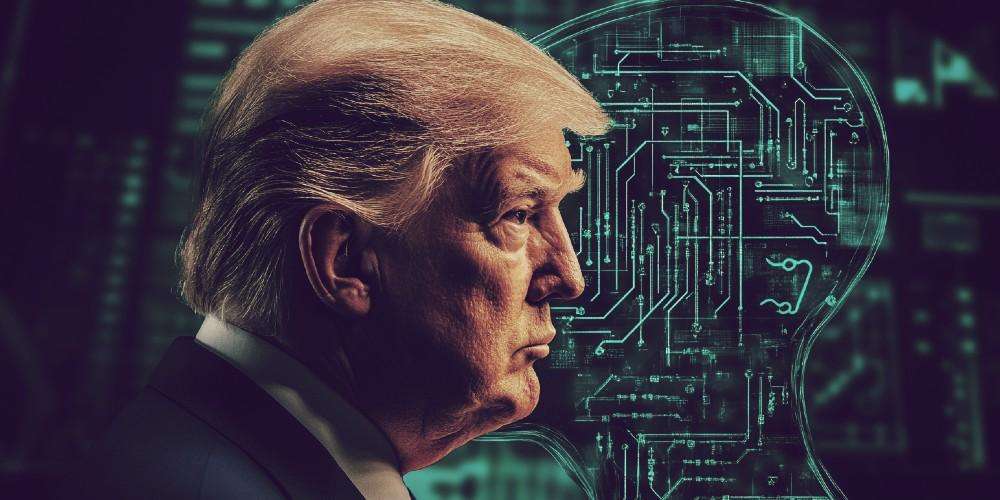
Trump’s administration is moving forward with a draft executive order aimed at curbing state-level AI regulations, favoring a national approach to keep American innovation leading the pack. This step comes as states ramp up their own rules on artificial intelligence, which could fragment the market and hinder U.S. competitiveness against global rivals like China.
The order directs Attorney General Pam Bondi to form an AI Litigation Taskforce within 30 days. Its mission: challenge state AI laws in court if they interfere with interstate commerce or clash with federal rules. At the same time, Commerce Secretary Howard Lutnick would alert non-compliant states that they risk losing out on funds from the Broadband Equity Access and Deployment program—a massive $42 billion initiative already distributed nationwide.
President Donald Trump laid the groundwork for this in a recent statement: “instead of a patchwork of 50 State Regulatory Regimes.”
Supporters in the AI sector, from OpenAI’s Sam Altman to firms like Andreessen Horowitz, argue that varying state policies create chaos for businesses. A unified federal framework would streamline operations, boost investment, and ensure America stays at the forefront of tech-driven economic growth. House Majority Leader Steve Scalise echoed this sentiment: “You’re seeing China move very aggressively… AI is the wave of the future, but we want America to be dominant in it and we want our policies to reflect that.”
Critics, however, see it as overreach. New York State Assemblymember Alex Bores called the draft “a blank check to Donald Trump’s tech billionaire backers who’ve already made a fortune on — and now stand to profit exponentially more from — allowing unconstrained AI to wipe out jobs, destroy our kids’ brains, and drive electricity bills through the roof.” He added: “Let’s be clear: we need a federal solution. But we need one that’s crafted by experts and doesn’t sell you out to the highest bidder. Until then, states must act.”
On the Hill, reactions split along familiar lines. Rep. Marjorie Taylor Greene pushed back: “There should not be a moratorium on states rights for AI… States must retain the right to regulate and make laws on AI and anything else for the benefit of their state.”
House Minority Leader Hakeem Jeffries noted: “That provision doesn’t appear to have a lot of support amongst Democrats and Republicans in the Congress… So I don’t know why Donald Trump is bringing it back up at this time.”
Sen. Mark Warner warned: “If we take away the pressure from the states, Congress will never act… Let’s look at the fact we never did anything on social media. If we make that same response on AI and don’t put guardrails, I think we’ll come [to] rue it.”
White House officials stress that the order remains in draft form and discussions are ongoing. Meanwhile, talks with Republican lawmakers include a potential moratorium on certain state AI laws, possibly tucked into upcoming legislation. This could bar states from dictating AI development while permitting rules on fraud, consumer safety, and child exploitation.
From an economic standpoint, fragmented regulations risk slowing job creation in high-tech sectors and deterring foreign investment. A cohesive national policy could fuel expansion in AI-related industries, from data centers to software, helping secure America’s position in the global economy. As the draft evolves, it signals a clear intent to prioritize innovation over regulatory silos, potentially averting economic pitfalls from a divided approach.




Uh..no. No way i want this corrupt israhell first gubbament’s attempt to supercede states rights. If zios like Sam ALTMAN and Andreeson HOROWITZ are for it, i’m against it. There is nothing about AI rhat is AMERICA FIRST