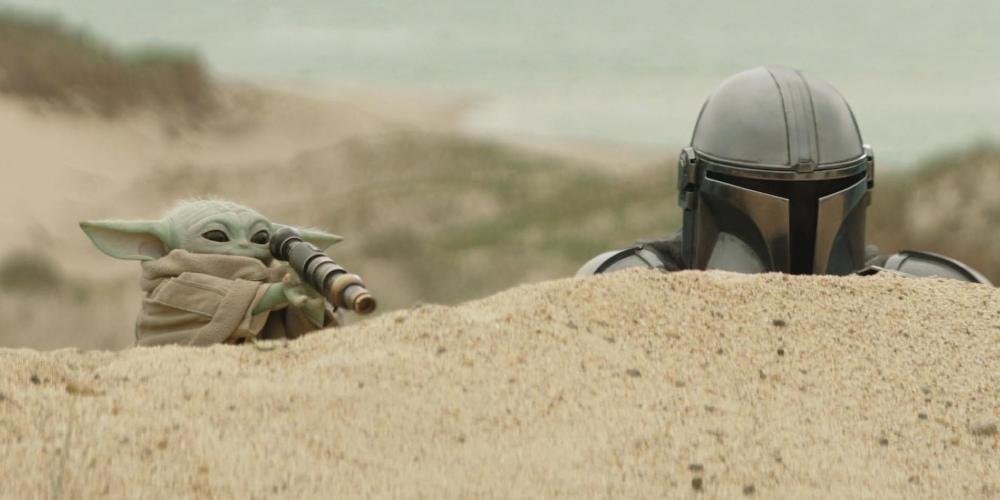
The latest chapter in Disney’s stewardship of Star Wars has arrived, and the numbers tell a story of a once-mighty franchise stumbling under the weight of its own miscalculations. “The Mandalorian and Grogu” opened to $81.9 million domestically over the three-day weekend, a figure that, while not catastrophic on paper, signals deeper troubles when adjusted for inflation and measured against past performances.
What was supposed to be a triumphant return to the big screen for beloved characters has instead highlighted how far the galaxy has fallen from its cultural dominance.
This underwhelming start—trailing even the maligned “Solo: A Star Wars Story” when accounting for inflation—raises serious questions about Disney’s long-term strategy. Under Kathleen Kennedy’s leadership, the franchise shifted from mythic storytelling rooted in heroism, redemption, and clear moral order to a vehicle for contemporary social messaging. The result has been a slow erosion of the very audience that made Star Wars a generational phenomenon.
Disney’s acquisition of Lucasfilm in 2012 came with sky-high expectations. Yet film after film and series after series have delivered diminishing returns, both financially and creatively. The core problem isn’t audience fatigue with Star Wars itself, but exhaustion with what Disney has done to it.
The pattern is unmistakable. “The Force Awakens” soared on nostalgia, but subsequent entries grew more divisive. Heroes from the original trilogy were diminished or sidelined, while new characters often served as vehicles for lectures rather than legends.
“The Mandalorian” initially succeeded by recapturing some of that classic spirit—lone warrior, unlikely bonds, moral clarity—but even that momentum faded as the franchise chased trends instead of timeless truths.
Jon Favreau’s direction brings competent action and the undeniable charm of Grogu, yet early reviews describe the film as entertaining but forgettable, episodic rather than epic. In an era where audiences crave substance amid cultural chaos, Star Wars once offered escape into a universe of good versus evil. Replacing that with irony, deconstruction, and forced representation has left many wondering why they should invest time and money.
The Cost of Alienating the Faithful
Fans did not abandon Star Wars; Star Wars, under its new stewards, abandoned them. Public statements dismissing core audiences as outdated or problematic only accelerated the disconnect. When executives prioritize signaling over story, ticket sales reflect the betrayal.
“Solo” became a cautionary tale, shelving planned adventures. Now “The Mandalorian and Grogu,” despite lower expectations due to its more modest budget, risks reinforcing the narrative of decline.
This isn’t merely about box office spreadsheets. Star Wars once embodied aspirational ideals—courage in the face of tyranny, sacrifice for the greater good, the possibility of redemption. These themes resonate because they echo deeper realities about human nature and the battle between light and darkness. When those elements are diluted or inverted to fit modern ideological fashions, the magic dissipates.
Comparisons to “Solo” are particularly telling. That film disappointed in 2018, yet current adjusted figures show “The Mandalorian and Grogu” falling short even of that benchmark. International totals hover around $63 million for the opening, insufficient to guarantee profitability without exceptional word-of-mouth.
With theaters demanding their cut, breaking even requires the film to approach half a billion worldwide—a tall order given current trajectories.
Lessons for a Franchise at a Crossroads
Kennedy’s departure from Lucasfilm offers a potential reset, but the involvement of longtime collaborators like Dave Filoni in this project suggests continuity of the same challenges. Disney has poured billions into the property, yet the return has failed to justify the initial investment when measured holistically. The issue runs deeper than any single film: it is a failure to respect the source material’s foundation in moral order and heroic virtue.
Hollywood’s broader struggles with original storytelling and audience trust compound the problem. Superhero fatigue, streaming fragmentation, and cultural polarization have changed the game, but Star Wars’ wounds are largely self-inflicted. Audiences have demonstrated they will show up for quality—witness the early success of “The Mandalorian” series—but they tune out when agendas eclipse adventure.
As the franchise charts its next steps, the path forward demands humility and a return to fundamentals. Great stories endure not because they mirror every fleeting social trend, but because they speak to eternal truths about courage, loyalty, and the triumph of good.
The Force may be fictional, but the principles that once powered Star Wars are not. Until Disney rediscovers them, the franchise’s troubles are likely to persist, serving as a cautionary tale for any cultural institution tempted to trade heritage for headlines.