


(Substack)—When the Federal Reserve meets this Wednesday, most mainstream economists will frame it as a routine policy update — a technical exercise in managing inflation and employment through the precision tools of modern monetary theory. But for anyone paying attention, these “routine” meetings are anything but. Every time the Fed meets behind closed doors, the stakes are enormous — not just for Wall Street traders, but for every American family trying to buy groceries, pay rent, or keep up with a mortgage that now costs twice what it did three years ago.
Chair Jerome Powell faces a narrowing corridor of choices. Inflation remains sticky, consumer debt is at record highs, and the federal government continues to run deficits that would have been unthinkable a decade ago. The Fed has spent the better part of two years trying to convince the public that inflation is “under control,” but prices for essentials tell a different story.
Food, fuel, and housing remain painfully elevated, and wage growth is now lagging the cost of living once again. The official CPI may have cooled from its peak, but it’s still miles from the Fed’s self-imposed 2% target — and the so-called “soft landing” is beginning to look more like a slow-motion stall.
The consensus expectation is that Powell will cut rates a quarter-point. On paper, that makes sense — the Fed doesn’t want to crush what’s left of the labor market or trigger another round of bank failures. But the minor move be less about “stability” and more about survival. Every quarter-point hike now translates to tens of billions in additional interest payments on the national debt.
That debt, now over $38 trillion, has become the central dilemma of U.S. economic policy. For years, the Fed’s solution to every crisis was lower rates and more liquidity. That worked when inflation was tame and the dollar’s supremacy went unchallenged. But the global landscape has shifted. BRICS nations are actively working to de-dollarize trade, and America’s fiscal recklessness has become an international concern. The Fed is a political institution managing decline — and hoping the public doesn’t notice.
If Powell signals a rate cut, markets will surge in the short term. Stocks will rally, and pundits will call it a victory for the “resilient economy.” But make no mistake — a pivot would also be a sign of surrender. Cutting rates into an inflationary environment risks reigniting the very price pressures the Fed claims to have contained. It would also confirm what many have suspected: that the central bank is trapped. It can’t raise rates without breaking the system, and it can’t cut them without losing credibility.
Even a “steady” decision — no cuts, no hikes — has consequences. By holding the line, the Fed will continue to pressure borrowers across the board. Credit card delinquencies have reached their highest level in over a decade, auto loan defaults are climbing, and mortgage affordability is at a generational low. Retirees and savers may finally earn interest on deposits, but that small relief is offset by the devaluation of their purchasing power. Meanwhile, the top 1% — those closest to the flow of cheap money during the last decade — remain largely insulated, holding real assets that inflate with the system they helped create.
The deeper question isn’t whether Powell will pause or pivot. It’s whether the Fed has any real control left. Decades of intervention have distorted market forces beyond recognition. Artificially suppressed rates fueled asset bubbles, while quantitative easing created a dependency on monetary stimulus that can’t easily be unwound. The economy the Fed now manages isn’t organic — it’s engineered, fragile, and addicted to cheap liquidity.
Whatever happens Wednesday, the announcement will likely be couched in familiar language about “data dependency,” “long-term stability,” and “sustainable growth.” But the reality behind those buzzwords is far more sobering. America is entering a new phase of financial history — one where the tools that built prosperity now risk dismantling it. The Fed’s decisions this week won’t fix the structural rot in the system; they’ll only determine how quickly the cracks widen.
For everyday Americans, the prudent path remains the same: reduce exposure to debt, preserve tangible value, and stay alert to the shifting tides of monetary power. Because whether the Fed moves, pauses, or pivots, the deeper trend is unmistakable — confidence in the system is eroding, and the consequences will extend far beyond this Wednesday’s meeting.

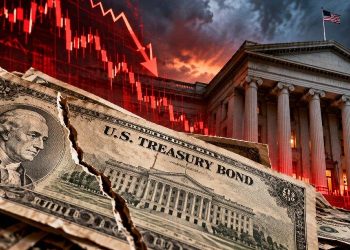


from the article, “. . . The economy the Fed now manages isn’t organic — it’s engineered, fragile, and addicted to cheap liquidity. ” Kinda like how a virus was “engineered” and “turned rabbit” . . . once again the EXPERTS are showing they are not to be worshipped as all knowing oracles of knowledge, or in the case of scientists, MAD . . .