

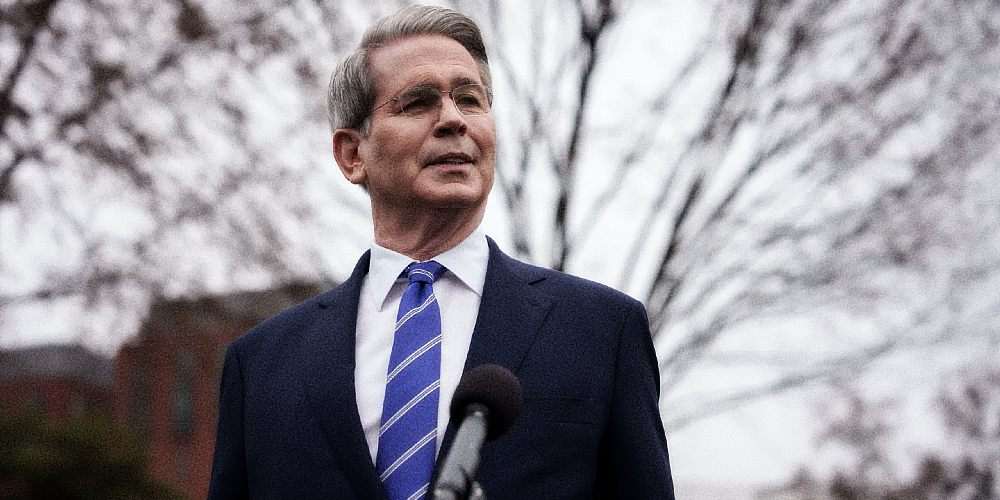
President Trump’s push to wield emergency tariff powers just got a vote of confidence from his own Treasury Secretary. Scott Bessent, fresh from attending the Supreme Court arguments, told reporters the session “went very well” for the administration. This case centers on the International Emergency Economic Powers Act, a tool Trump has leaned on to slap duties on imports and shield American industries from unfair foreign competition.
Bessent praised the solicitor general’s performance as “very powerful,” while slamming the challengers’ lawyers who, in his view, “fell flat on their face.” He brushed off questions about potential refunds of billions in collected tariffs if the court sides against the White House. “We’ll cross that bridge when we come to it, and I’m confident we won’t have to,” Bessent said.
The hearing featured a pointed moment from Justice Brett Kavanaugh, who pressed the plaintiffs on whether a president could enact a full 100% embargo but not a modest 1% tariff. Bessent seized on this, calling it a revelation of the opponents’ shaky ground. He went further, accusing the challengers of fumbling basic economics.
“Our trading partners have been doing this to us for decades,” Bessent noted, arguing that if tariffs really hammered consumers, foreign governments wouldn’t rely on them so heavily.
This isn’t just about abstract trade rules—it’s tied to real stakes for American families. Bessent pointed to the administration’s fentanyl-focused tariffs on China as a prime example. These measures, he explained, are “life-and-death” matters that finally dragged Beijing to the table for talks on curbing precursor chemicals fueling the opioid crisis.
On the same day as the hearing, the Trump administration signaled relief for China based on their promised crackdown. According to The National Pulse:
President Donald J. Trump has issued a new executive order lowering tariffs on Chinese goods from 20 percent to 10 percent, effective November 10, 2025. The move comes as part of a broader agreement with the People’s Republic of China (PRC), in which Beijing has pledged to take “significant measures” to curb the export of synthetic opioids, particularly fentanyl, into the United States.
As part of the new arrangement, China has agreed to block the export of certain chemicals used in fentanyl production to North America and tighten global export regulations on others. In return, the U.S. will reduce the additional ad valorem duty rate to 10 percent, reversing the hike implemented in March 2025. The Department of Homeland Security (DHS), in coordination with other agencies, has been tasked with overseeing Chinese compliance. President Trump emphasized that the order “may be modified if the PRC fails to fulfill its promises to combat the synthetic opioid crisis.”
Looking ahead, Bessent tied the tariff fight into a bigger vision for revitalizing the U.S. economy. He described the “Parallel Prosperity” approach, blending trade protections with tax cuts and energy independence to lift both everyday workers and investors.
With Wall Street already booming following the Covid scare, Bessent stressed it’s Main Street’s turn now. Treasury plans an “extract and educate” effort to break down Trump’s $2 trillion tax reform, ensuring “working Americans see and feel the benefits.”
If the Supreme Court upholds these powers, it could cement tariffs as a key weapon in America’s arsenal against lopsided global trade. For a nation weary of watching jobs and industries bleed overseas, this ruling might just tip the scales back toward homegrown strength and security.


As foreign policy, there is no doubt tariffs fall within the realm of executive authority. For the courts or congress to stick their nose into this business is blatantly usurpative, and unconstitutional. Slap them back, SCOTUS.