

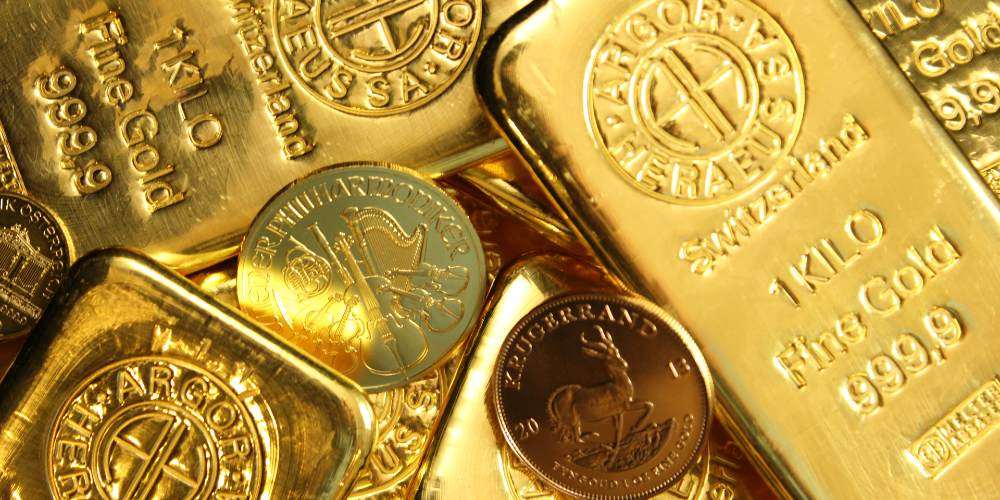
Gold has captivated humanity for millennia, serving not only as a symbol of wealth and power but also as a foundational element of economic systems worldwide. Its intrinsic properties—durability, rarity, malleability, and resistance to corrosion—made it an ideal medium for exchange, store of value, and unit of account long before the advent of paper money or digital currencies. From the tombs of ancient pharaohs to the vaults of modern central banks, gold’s role in currency has evolved through cultural, technological, and geopolitical shifts. This article traces that journey, exploring how gold transitioned from rudimentary barter aids in early civilizations to a cornerstone of global finance, and its continued relevance in today’s fiat-dominated world.
Ancient Civilizations: The Birth of Gold as Money
The use of gold as a form of currency can be traced back over 6,000 years, beginning in the cradle of civilization. In ancient Mesopotamia around 4000 BCE, gold was used in uncoined forms for transactions, with records from the 24th century BCE documenting its exchange in standardized weights. Similarly, in Egypt by 2600 BCE, gold—known as “nebu,” symbolizing divinity—was crafted into jewelry, artifacts, and burial items, such as the famous mask of Tutankhamun, which weighed over 20 pounds. While silver often dominated due to its abundance, gold served as a unit of account for large purchases, with gold-silver ratios appearing in records from the 12th century BCE.
A pivotal advancement occurred in the Kingdom of Lydia (modern-day Turkey) around 600 BCE, where King Alyattes minted the first standardized coins from electrum, a natural gold-silver alloy. His successor, King Croesus, refined this by issuing pure gold coins known as the Croeseid or stater, creating the world’s first bimetallic monetary system. These coins, stamped with symbols for authenticity, facilitated trade across the Mediterranean due to their consistent weight and purity, marking gold’s shift from mere commodity to formalized currency.
The Persians, under Cyrus the Great after conquering Lydia in 546 BCE, adopted and expanded this system with gold darics, used for imperial transactions and maintaining economic stability. In ancient Greece, while silver coins like the Athenian owl dominated daily trade, gold staters were issued for larger dealings, supported by access to Scythian gold supplies. Rome further propelled gold’s monetary role; Julius Caesar introduced the gold aureus in 49–44 BCE, weighing about 8 grams and valued at 25 silver denarii, enabling vast imperial trade. However, debasement of silver coins led to economic instability, prompting Emperor Constantine in 312 CE to establish the gold solidus, a stable 4.55-gram coin that endured for centuries.
Across other regions, gold’s allure was universal. In Mesoamerica, the Aztecs, Incas, and Mayans valued it for religious artifacts rather than money, while in ancient China and India, it was used for jewelry and trade along the Silk Road. These early uses laid the groundwork for gold’s enduring economic significance.
The Middle Ages: Gold in Empires and Trade Networks
Following the fall of the Roman Empire in 476 CE, the Byzantine Empire preserved gold’s monetary legacy through the solidus, which maintained consistent weight and purity for over 700 years via strict minting controls and anti-counterfeiting measures. This coin influenced the Islamic world, where the gold dinar, introduced in 691 CE, provided stability across caliphates and facilitated extensive trade networks.
In medieval Europe, gold coins like the Venetian ducat and Florentine florin (introduced in 1252) became staples for international commerce, fostering the rise of banking families such as the Medici. Goldsmiths acted as early bankers, storing gold and issuing promissory notes, which evolved into paper money precursors. Monarchies regulated gold’s purity to assert economic control, while in West Africa, empires like Ghana, Mali, and Songhai controlled vast gold fields, taxing trade and amassing wealth—Mansa Musa’s 1324–1325 pilgrimage to Mecca famously flooded markets with gold, depressing prices for a decade.
China pioneered paper money during the Han Dynasty (140 BCE) and Tang Dynasty (618–907 CE), using promissory notes to ease merchant transport, though overprinting caused inflation. This period highlighted gold’s role in stabilizing economies amid expanding global trade.
Age of Exploration and the Influx of New World Gold
The late 15th century marked a dramatic shift with European colonization of the Americas. Spanish conquistadors plundered Aztec, Inca, and Mayan gold—valued more for religious purposes than currency—flooding Europe with supply from 1500 to 1650, causing inflation of 300–400% and devaluing currencies. Colonial mining in Colombia, Peru, and Brazil, often using forced labor, sustained this influx, with treasure fleets transporting gold escudos and doubloons.
In the nascent United States, the 1792 Coinage Act established a bimetallic standard with gold eagles at a 15:1 silver-gold ratio. Gold discoveries, such as the 1849 California Gold Rush, attracted over 300,000 migrants, transforming economies and financing the Civil War. Similar rushes in Australia (1850s), New Zealand (1862), Canada, Alaska, and South Africa amplified gold’s global impact, spurring industrial growth.
The Gold Standard: Stability and Globalization
By the 19th century, the Industrial Revolution prompted widespread adoption of the gold standard, linking currencies to fixed gold amounts for stable exchange rates and international trade. Britain led, accidentally in 1717 under Isaac Newton and formally in 1816, defining the pound as 7.32238 grams of gold. The U.S. followed de facto in 1834 (16:1 ratio), ending silver dollar coinage in 1873 and formalizing it in 1900. By 1912, 49 countries adhered, fostering a “classical” era (1870s–1914) of redeemable paper notes, free trade, and economic growth.
World War I disrupted this, as governments printed money, leading to devaluations (e.g., British pound fell 35% by 1920). Post-war efforts, like Britain’s 1925 resumption via a gold-exchange standard, faltered, contributing to the Great Depression. In 1933, U.S. President Franklin D. Roosevelt banned private gold holding, confiscated reserves, and revalued gold from $20.67 to $35 per ounce, devaluing the dollar by about 70%.
Bretton Woods and the Post-War Order
The 1944 Bretton Woods Conference established a new system, pegging the U.S. dollar to gold at $35 per ounce, with other currencies tied to the dollar, promoting post-war stability and reconstruction. This required massive U.S. gold reserves, but inflation prompted foreign redemptions, draining stockpiles. In 1968, President Lyndon B. Johnson ended gold reserve requirements for the dollar, and in 1971, Richard Nixon’s “Nixon Shock” suspended dollar-gold convertibility, effectively ending Bretton Woods and ushering in floating fiat currencies. U.S. citizens regained the right to own gold in 1974.
Modern Economies: Gold as a Safe Haven and Reserve Asset
Since 1971, gold has transitioned from formal currency to a hedge against inflation, economic uncertainty, and fiat devaluation. Prices surged in the 1970s to over $800 per ounce amid high inflation, and again post-2008 financial crisis. Central banks hold about 20% of above-ground gold, with the U.S. Federal Reserve possessing over 8,000 tons, viewing it as a “shadow” monetary asset for stability. Recent purchases by banks underscore its role amid geopolitical tensions.
In contemporary finance, gold is accessible via ETFs, mining stocks, and digital forms, serving as a portfolio diversifier. Its industrial uses in electronics, medicine, and aerospace add demand, while psychological trust in its scarcity reinforces value. Though no longer backing currencies directly, gold remains a barometer of economic health.
Conclusion
The history of gold as currency reflects humanity’s quest for economic stability and value preservation. From Lydian coins to the abandonment of the gold standard, gold has adapted to changing needs, surviving empires, wars, and financial revolutions. In modern economies, it endures as a safe-haven asset, reminding us of the fragility of fiat systems. As global uncertainties persist, gold’s timeless appeal suggests it will continue to play a vital role in the financial landscape for generations to come.




What’s a BCE?