(Alt-Market)—This article was written by Brandon Smith and originally published at Birch Gold Group
Recently one of the most important debates in the history of conservative discourse raged across the internet, with sides deeply divided and solutions rare or nonexistent. This debate went largely unnoticed by the rest of the country but it regards the deepest underlying foundations of our economic future.
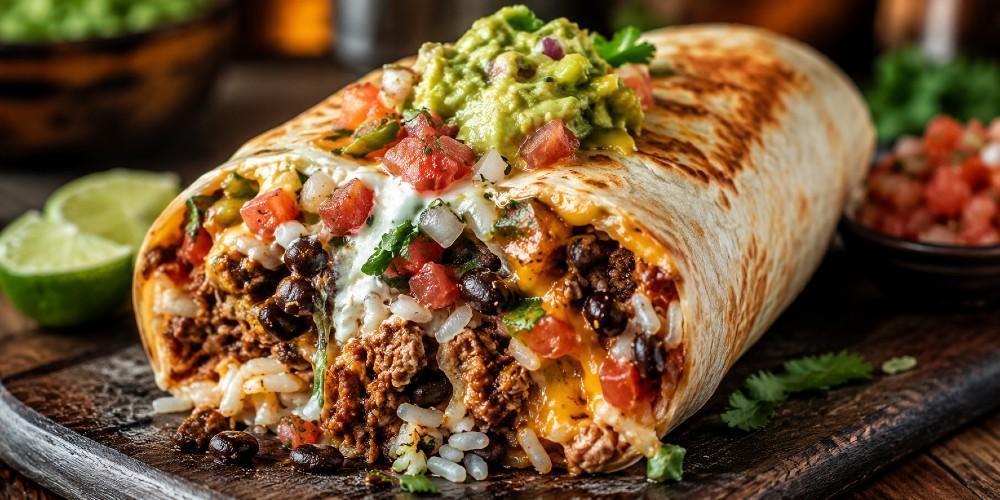
I am speaking, of course, about the “Great Burrito Debate” of 2026.
Okay, maybe I’m exaggerating about the significance but I do think this conflict taps into the core of people’s concerns about America’s inflation problem. Not only that, but it exposes a lot of misconceptions people have about what inflation is, what’s causing it and who is to blame.
The burrito debate started as an honest discussion about the cost of living crisis and somehow ended up as dog-pile on conservative manners when it comes to economic discourse. Many conservative and libertarian commentators jumped into the fray with their two cents, though, the vast majority of them have minimal economic background, which I think added more confusion than clarity to the issue.
After two decades of macroeconomic analysis (and predicting the stagflationary crisis well in advance of the Ivy League “experts”) I thought I might offer my own perspective.
Keep in mind, those of us in the alternative economic field had to fight against the lies of the Biden Administration as well as establishment economists like Paul Krugman and Federal Reserve officials like Janet Yellen just to wake the public up to the fact that inflation was upon us and that it was NOT “transitory”.
Ultimately, everyone’s bank balances and monthly bills could not be denied and the gas-lighting ended. The only recourse of the establishment at that point was to blame Trump for all of it. The “Herbert Hoover” comparisons were rampant.
Who Really Has The Power To End Inflation?
To be clear, Trump has reduced the size of government by around 12%, which is an incredible accomplishment considering the amount of legal resistance that was put in place to stop him. However, he did not reduce government spending, which is currently 3% higher than under Biden.
One problem is that 60% of all federal spending is mandatory. By law, programs like Social Security, Medicare, Medicaid, etc. all scale their spending to match inflation and there is very little that Trump can do about that. Then there’s the rising interest on debt payments, which is controlled by the Federal Reserve, not the President. Trump’s cuts were only focused on discretionary spending, on institutions like USAID, and even those measures were repeatedly throttled by activist judges.
Trump has tried to circumvent the bureaucracy by issuing tariffs as a counter to the debt problem, but once again, activist judges have intervened. For those who claim that tariffs are “causing inflation”, this is simply false. The contribution tariffs make to CPI is negligible (around 0.5 percentage points). The media (and some libertarians) continue to falsely claim that tariffs are an issue.
This is where I think the public has a disconnect from the reality of the situation, and this includes fiscal conservatives who think they are “holding Trump’s feet to the fire” over US debt. The president is not all-powerful and he has very little control over the direction of the US economy. If he made all the cuts these people demand, he would have to become a dictator and he would have to do it by force.
That is to say, they can’t have it both ways. Either the President takes a constitutional hands-off approach to the economy and government spending, or, he goes full-bore Francisco Franco, declares himself supreme leader, and starts chopping out large pieces of the government (the Spanish “Stabilization Plan” of 1959, not the price control plan of 1939 which ultimately failed).
That’s the only way these kinds of policies are going to happen in the US because Congress isn’t going to do jack. Congress’ primary job is to maintain the status quo, not enact solutions.
The reason fiscal reform is impossible is because our modern government is designed to perpetuate itself; it is designed to grow forever. This is accomplished through the bureaucracy, which is the REAL power base within American politics. Most people do not understand that political leaders come and go, but the bureaucracy is forever and there are no term limits.
The socialist parasites within these structures control the direction of the country and the economy (this includes the central bank). When they face any real political opposition, they simply stall, obstruct, and wait for that political party or leader to leave office. Trump, for example, has only four years to redirect a system that has been on the wrong path for decades. It’s not going to happen without bringing the hammer down.
This brings us back to the “Burrito Debate” and the issue of inflation vs public expectations. The debate started with a post quoting college students complaining about the cost of basic necessities including a “$20 dollar price tag” on burritos. This triggered a wider discussion about affordability vs perception, then spiraled into an argument over conservatives not having enough empathy for struggling youth.
Critics asserted that conservative dismissals of the ongoing cost of living crisis will lead to younger generations rushing to support socialism, and MAGA would be to blame. There are two elements to this argument that I think need to be addressed and I’ll try to summarize as best I can.
Gen Z Has No Point Of Reference Because History Is Ignored
First, there’s the issue of younger generations not having a point of reference for how bad the cost of living crisis today is compared to previous generations. Second, there’s the lack of understanding among older generations on where the current crisis is likely headed in the future without drastic action.
Of course, no burrito actually costs $20. This is a terrible contention which is not based in reality. Maybe it’s the most expensive burrito in the most expensive restaurant in a high cost city like San Francisco or New York, but for the majority of the country a burrito is pocket change.
This brings me to the first issue, which is the younger generation’s lack of historical perspective. To be clear, the current inflationary crisis in the US is NOT the worst inflationary crisis this country has seen in modern times. Not yet, anyway.
From 1972-1981 (just after the US dollar was fully detached from the gold standard), the US suffered one of the most brutal series of inflationary beatings in the nation’s history. Inflation rates hit as high as 13% per year, food prices rose by around 120%, rent prices jumped by 75%, home prices rose by 150% and gas shortages were rampant.
The 1970s demoralized middle-class America. The poverty rate hit 14% and the unemployment rate peaked at 9%. Wages remained stagnant or even dropped for some workers. The average yearly income by 1981 was only $12,000 for individual workers. Most younger people today complain about how “the boomers had it easy” with food prices and house prices back in the day. They don’t actually consider how low wages were, or how high inflation was.
The point is, yes, Gen Z is struggling. Their fears should not be dismissed as frivolous. That said, I think because of internet culture and false expectations, many young people assume they are going through the worst crisis of all time and that no one understands them.
In reality, generations before them had it MUCH worse. The inflationary crisis of the 1970s did not end until the Federal Reserve exploded interest rates to 20%, causing a deflationary reset and making loans unattainable for most people for years.
If you are in your 20s and you think you’re not supposed to be struggling, I’m here to tell you that you’re wrong. We all had to struggle, many of us with terrible wages and low job availability compared to today. Don’t expect to be living comfortably until your mid-30s. It’s just the way things have always been.
Every generation experiences periods of economic uncertainty. But this doesn’t mean that there’s not considerable danger looming in the near future.
Kicking The Can Has Created An Economic Time Bomb
What some conservatives get wrong is the notion that the system can be fixed politically and that things will improve if we only keep Democrats out of office. Keeping leftists away from power is always a good thing, if only to prevent the country from going completely communist and cannibalizing itself. But when it comes to inflation, once an avalanche is set in motion it can’t be stopped and this avalanche has been building for decades.
Inflation cannot be reversed without a deflationary event. Since the credit crash of 2008-2009, political leaders and the Federal Reserve have been aggressively trying to prevent any deflation (the Keynesian standard). Which means that America (and most of the world) has not taken the deflationary medicine we should have taken years ago. Instead, we kicked the can down the road.
Some “experts” believe we can kick the can down the road for eternity. This is foolish.
The Catch-22 is that the central bankers must continue to intervene to prevent deflation but each time they do they pump up the money supply and create even more inflation, which then demands more deflation for balance.
The pandemic event was the most recent instance of this intervention. The covid bailouts caused an immense inflationary reaction and the spike in prices that followed is what most of Gen Z is feeling today as they enter the work-a-day world.
If the Fed stimulates, more inflation is on the way. If they hike interest rates and refuse to intervene, the US faces a deflationary crash. This is where we’re at in 2026 and yes, Gen Z and Gen Alpha will be hit the hardest unless something is done. But what?
The only policy solution that makes sense is an organized deflation plan, if such a thing is possible. Meaning, a reformed government would have to eliminate the central bank, hike rates far higher than they currently are, refuse to bail out failing companies relying on cheap debt, then institute austerity measures on social programs for everyone except the disabled and elderly. This is basically what Franco did (while also hunting down hundreds of thousands of liberals and communists, but let’s set that aside for now).
This government would have to find a way to cut spending, balance the budget and also act to mitigate greater damage to consumers by reducing taxes wherever possible (perhaps even ending property taxes on single family homes).
That would require a level of institutional coordination and cooperation that does not exist in the US right now. Again, Trump, or someone else, would have to act like an economic authoritarian and dictate every detail of the operation.
The system could return to a more normal condition after the economic bubble has been strategically burst, but I suspect similar actions would have to take place perhaps every 25 years to prevent another buildup of inflationary pressure. It would be a kind of “reset”, but not in the way that globalists at the WEF imagine. It would be a planned reset coordinated with the public so we are no longer waiting around for the bankers or random chance to decide when a crash is going to occur.
Meaning, each generation would have to accept the responsibility of dealing with a controlled deflationary downturn for at least a few years. Planning such an event would make it possible for the public to prep ahead of time. It could become a sort of deflationary tradition; similar to a Jubilee.
The only other option, as noted, is to do nothing and wait for the bubble to burst on its own. Eventually, high prices will drag down spending enough that deflation sets in. Job losses will jump. The Yen-carry trade will derail. A Black Swan event will pull the rug out from under us – Something will happen that sets the deflationary chain of events in motion and the central bank will do what it always does: Print money.
This is true of almost every country in the world right now. The US is not the only economy facing inflationary dilemmas, it’s just the largest.
A time will come when the dollar won’t be able to take it anymore and the currency system will break. Then, your burritos really will cost $20 or more and that will be a terrible day of reckoning. It’s a conundrum that should have been dealt with back in 2009, but NO ONE wants to be responsible for the financial pain caused by taking that bitter deflationary pill.
If you would like to support the work that Alt-Market does while also receiving content on advanced tactics for defeating the globalist agenda, subscribe to our exclusive newsletter The Wild Bunch Dispatch. Learn more about it HERE.
The dollar buys less today than it did a year ago, a decade ago, a generation ago. That slide is the predictable result of endless printing and borrowing. Dr. Ron Paul believes the FED has the answer. But they’re keeping it to themselves. Fortunately, a new financial chart has publicly exposed their secret moves. See it for yourself HERE.