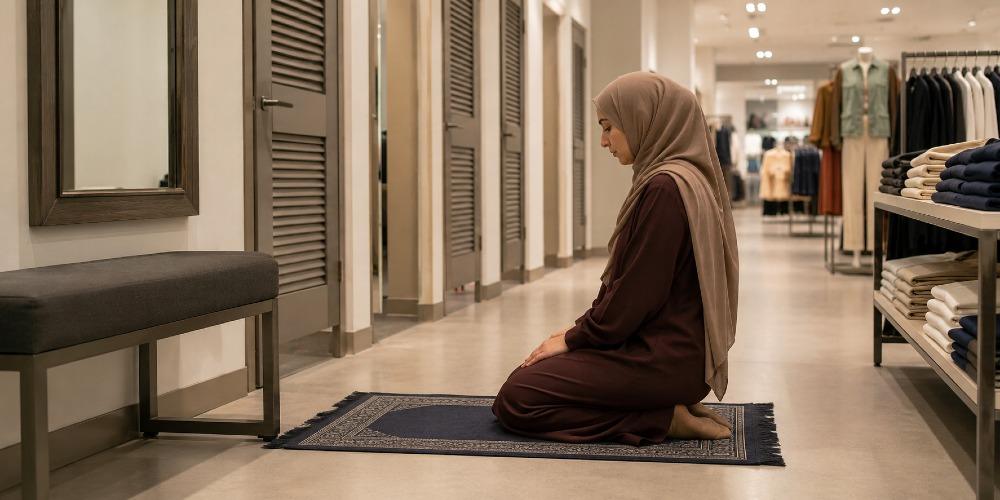
A Target store in Apple Valley, Minnesota, a suburb south of the Twin Cities, has turned customer fitting rooms into a dedicated Muslim prayer space, complete with barriers blocking shoppers and signs warning them to stay out. Photos shared by a concerned customer show retractable belts cordoning off a hallway of six changing rooms, one door prominently displaying “RAMADAN MUBARAK” alongside instructions that the room is for prayer only.

Ramadan ended months ago in mid-March, yet the setup persisted into late May. This is not mere accommodation—it’s a clear prioritization of one faith’s practices over the shopping public’s convenience in a major retail chain. Target’s move raises pointed questions about whose beliefs truly matter in corporate America today.
Minnesota’s significant Somali Muslim population has long shaped local institutions, from schools to public spaces. Just weeks before these photos surfaced, a nearby school district drew national scrutiny for plans to install prayer rooms and foot-washing stations in high schools using taxpayer funds.
Officials backpedaled on the “prayer room” label, calling it a multipurpose space, but the intent remained transparent: bending public resources to favor Islamic observances.
Target’s internal practices echo this pattern. A 2023 Reddit thread from company employees revealed similar prayer rooms set up by HR for Muslim team members in Minnesota stores.
Comments praised the “thoughtful” inclusivity, while a suggestion for Christian accommodations was quickly buried by downvotes. The message is unmistakable: diversity initiatives extend in one direction only.
Legal Accommodations or Preferential Treatment?

Federal law under Title VII of the Civil Rights Act requires employers to provide reasonable accommodations for employees’ religious practices. Yet nothing mandates converting public customer areas into exclusive worship spaces, especially long after the relevant holy period.
Target has not clarified whether this setup serves employees, customers, or both, nor why it remains in place.
This selective zeal stands in stark contrast to the treatment of Christianity. Crosses, Nativity scenes, and even silent prayer have faced hostility in schools, government buildings, and corporate environments. The same voices championing “religious freedom” for Muslims often champion restrictions on Christian expression under the guise of neutrality.
As Minnesota Congressman Tom Emmer noted regarding the school plans, when the left demands religion out of public life, they mean Christianity specifically.
Such double standards erode the principle of equal treatment under the law. America’s founding rested on a Judeo-Christian moral framework that allowed robust religious liberty without establishing any one faith as privileged.

Departing from this invites division and favoritism, turning shared commercial spaces into contested religious territories.
The broader cultural shift in Minneapolis—once known for its Midwestern character—reflects rapid demographic changes and political pandering. Loudspeaker calls to prayer in certain neighborhoods and institutional deference to Islamic practices signal a transformation that many residents never voted for or anticipated. Corporations like Target, eager to signal virtue, accelerate this by sidelining the majority’s expectations.
The Cost of One-Way Tolerance
Customers entering a store expect functional access to fitting rooms, not barriers enforcing religious exclusivity. When profit-driven companies like Target—already navigating past controversies over social policies—choose sides so overtly, they risk alienating their core American customer base. True inclusion would mean equal respect for all faiths or none in neutral public spaces, not curated privileges for one.
This episode underscores a deeper tension: multiculturalism without assimilation breeds parallel societies rather than a unified nation. History warns that societies prioritizing one group’s religious demands over shared civic norms sow seeds of resentment and fracture. America’s strength has always come from e pluribus unum—out of many, one—under common principles, not fragmented identity politics.
As the Apostle Paul warned the early church amid cultural pressures, “Be ye not unequally yoked together with unbelievers: for what fellowship hath righteousness with unrighteousness? and what communion hath light with darkness?” (2 Corinthians 6:14).
In a nation blessed by biblical foundations, Christians must discern when tolerance becomes surrender and when institutions demand compromise of core convictions.
Target’s prayer rooms are more than an inconvenience—they exemplify how elite institutions rewrite the rules of public life to favor certain minorities while marginalizing the historic American majority. Shoppers and citizens alike should take note: true equality under God rejects such favoritism.
Discernment demands holding corporations accountable to consistent standards, not performative piety.