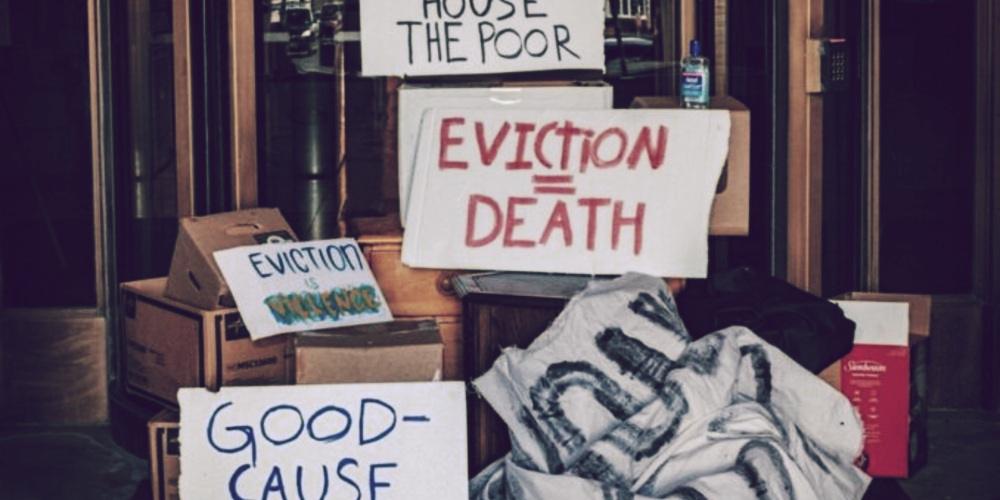
New York City’s rental market, already strained under layers of regulations, faces another layer of upheaval with the expansion of the so-called Good Cause Eviction law. What started as a state mandate in April 2024 has now burrowed deeper into the Big Apple’s housing fabric, courtesy of a City Council vote in late December that slapped additional tenant safeguards on top of the existing framework.
Signed into law by Mayor Eric Adams on January 10, 2025, this move covers evictions filed after January 17, aiming to shield renters from abrupt hikes and non-renewals. But as property owners and market watchers warn, it’s less about stability and more about strangling the incentives that keep apartments filled and buildings maintained.
The core of the law remains unchanged from its statewide rollout: Landlords can’t boot tenants without a valid reason—like nonpayment or serious lease breaches—and rent bumps are capped at inflation plus 5%, maxing out at 10% annually. For 2025, with New York area’s inflation clocking in at 3.79%, that translates to a presumptive ceiling of 8.79% before courts start sniffing around for “unreasonableness.” Exemptions exist for small owners with 10 or fewer units, post-2009 builds, and high-rent spots above 245% of fair market value—about $3,240 for a one-bedroom in the city. Yet critics see these carve-outs as too narrow to blunt the blow.
Enter the city’s add-on, which builds on the state rules by folding in stricter notice requirements and broader court defenses for tenants. Landlords must now attach detailed disclosures to every lease or renewal, spelling out whether Good Cause applies and listing exemptions down to the owner’s principal residence. Fail to do so, and you’re courting legal headaches in housing court.
“This is a direct assault on property rights,” says Ross Moskowitz, a veteran real estate attorney who chairs the Rent Stabilization Association. “Owners are being told they can’t manage their own assets without jumping through endless hoops.”
Moskowitz isn’t alone in sounding the alarm. The Real Estate Board of New York (REBNY) has long argued that such measures deter investment, pointing to a post-2019 Housing Stability and Tenant Protection Act (HSTPA) trend where multifamily sales dipped and vacancy complaints ticked up slightly—though not dramatically, per NYU Furman Center data.
A REBNY survey from early 2024 captured 781 owners fretting over neglected units and stalled repairs, as the promise of deregulation faded. Fast-forward to 2025, and with Good Cause now mandatory in NYC plus 17 opt-in municipalities like Albany and Ithaca, the chill is spreading.
“Landlords will simply stop renting,” Moskowitz predicts. “Why risk your capital when the state treats you like a utility?”
Recent numbers bear this out. The city’s latest Housing and Vacancy Survey, released in March 2025, pegged the rental vacancy rate at a dismal 1.4%—the lowest in decades—fueling the emergency declaration that extended rent stabilization through 2027. But here’s the rub: While tenant advocates celebrate protections for roughly 784,000 newly covered households, the supply side is drying up. Building permits for multifamily projects fell 12% year-over-year in the first half of 2025, according to Department of City Planning stats, with developers citing regulatory fatigue. In Brooklyn and Queens, where speculative flips once juiced inventory, sales of two-to-four family homes dropped 18% since the HSTPA, per PropertyShark reports. Good Cause, with its eviction barriers, only amplifies this freeze.
One can’t help but wonder if there’s more at play. Tenant groups like Housing Justice for All, which lobbied hard for these rules, boast of safeguarding “hundreds of thousands” from “debilitating rent hikes.” Yet whispers in real estate circles suggest the push benefits entrenched players—large institutional investors who can absorb the compliance costs while mom-and-pop owners fold.
Is this inadvertent cronyism, or a calculated squeeze to consolidate control under the guise of equity? After all, as eviction filings plummeted 49% since 2017—thanks to right-to-counsel laws and stabilization—the real winners might be the hedge funds snapping up distressed portfolios at fire-sale prices.
For everyday New Yorkers, the fallout could be grim. Picture blocks of boarded-up walk-ups in the outer boroughs, where owners opt to convert to Airbnbs or leave units empty rather than navigate court battles over a 9% increase.
“It’s turning the city into a ghost town for working families,” argues Steven Flax, executive director of the Small Property Owners of New York. Families eyeing a move for better schools or jobs? Forget it—renewals are now a tenant’s call, locking in occupancy even as needs change. And with the Rent Guidelines Board greenlighting modest stabilized hikes for leases starting October 2025, the pressure shifts squarely to unregulated units, where Good Cause reigns.
Governor Kathy Hochul, who inked the original budget deal, touted it as a bulwark against “price gouging.” But as opt-ins proliferate—Binghamton joined in April 2025, effective immediately—the law’s reach now touches over a million renters statewide. Proponents like State Senator Julia Salazar hail it as a victory for the vulnerable. Detractors, however, see a slow-motion exodus: Young professionals fleeing to Jersey, retirees cashing out, and builders eyeing Florida over Flushing.
New York’s housing woes won’t vanish with more mandates. True relief demands easing the regulatory boot on builders’ necks—streamlined zoning, tax credits for starter homes, incentives for family-sized units. Until then, Good Cause risks delivering not security, but stagnation: A metropolis where the only sure thing is higher costs for everyone else.