A volunteer from Ecuador says his third-world hometown is cleaner than the streets of America’s second-largest city. Juan Naula, founder of Clean LA With Me, has spent the last two years picking up mountains of illegally dumped furniture, mattresses, and household junk across Los Angeles. “Not even India shocked me like LA,” he told the New York Post. “My city is clean, and we are a Third World country.”
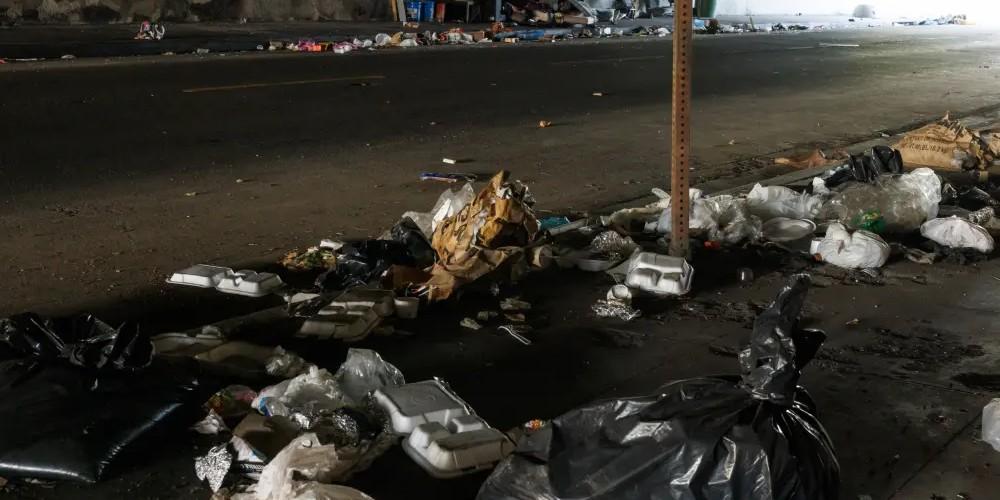
That is the real condition of Los Angeles right now. City sanitation crews hauled away 44.2 million pounds of illegally dumped garbage in just 16 months—27.3 million pounds in 2025 and another 16.9 million pounds through April 2026. The cleanup bill hit $42 million last year alone and is still climbing. This is not a minor nuisance. This is a city that has lost the basic capacity to keep its own streets from looking like a landfill.

High Fees, Zero Consequences
Residents are paying more for the privilege. Monthly trash collection for single-family homes has jumped nearly 64 percent, from $36.32 to $59.53, with further increases locked in through 2029 that will push the bill to $65.93. Incoming Mayor Nithya Raman voted for the initial 54 percent hike last year. Legal disposal of junk already runs about $115 a load.
When the city makes legitimate disposal expensive and then stops investigating the people who dump anyway, the predictable result is more dumping.
Investigations into illegal dumping largely ground to a halt in July 2024. By May 2025 there were 350 backlogged cases. Complaints have exploded—from roughly 114,000 illegal dumping pickup requests in 2024 to 383,000 in 2025—while citations have collapsed.

The city issued 102 citations in 2024, 81 in 2025, and only 29 so far this year. Earl Ofari Hutchinson, who has tracked the problem in South Los Angeles, put it plainly: outsiders dump there because “there is no real likelihood of a penalty or prosecution.”
South Los Angeles has absorbed the worst of it. One council district alone produced 5.5 million pounds of illegally dumped garbage in 2025. Two neighboring districts covering parts of South LA and Downtown accounted for another 8.8 million pounds. Together they represented more than half the citywide total. The county is no better.
Los Angeles County Public Works hauled more than 49 million pounds of illegal waste in 2025, a 14 percent jump, while cleanup spending nearly tripled in four years to $6.8 million. County officials logged 14,106 dumping reports last year and offered the usual bureaucratic shrug that “enforcement takes time.”

The Progressive Track Record
Raman takes office in December as the DSA-endorsed mayor of a city already drowning in trash, homelessness, and basic service failure. The Los Angeles Police Protective League has warned that she and her backers are “wolves masquerading as sheep” intent on embedding a socialist agenda.
Raman has described the Democratic Socialists of America as a “partner” in her work and kept their endorsement by a single vote after a last-minute internal fight. Her record on the City Council includes support for policies that treat enforcement as optional while treating rate hikes as the solution to every budget hole.
Naula and his volunteers have already removed more than 50,000 pounds from over 200 neighborhoods. They buy their own bags and pay disposal fees out of pocket because waiting for the city means watching the pile grow. “When people see trash dumped on the street, they think it’s OK to dump theirs there too,” he said. “It’s not just the government, OK? Everybody. Also, the people have to do their part.”

That is true. It is also true that people respond to incentives and to the visible absence of consequences. A government that raises fees, cuts investigations, and then lectures residents about personal responsibility is not governing. It is managing decline.
Scripture is clear about the duty of stewardship. “And the LORD God took the man, and put him into the garden of Eden to dress it and to keep it” (Genesis 2:15).
A city that cannot keep its streets free of rotting furniture and construction debris has abandoned even that elementary charge. Progressive leadership in Los Angeles has produced higher bills, weaker enforcement, and streets that a man from Ecuador finds more shocking than India. That is not compassion. That is the predictable fruit of ideology over order.

Raman’s first test is not another slogan about housing or equity. It is whether the city can pick up the trash it already charged residents more to handle. The numbers are not subtle. The streets are not subtle. And the comparison to a third-world country is not an exaggeration. It is the current condition of Los Angeles.