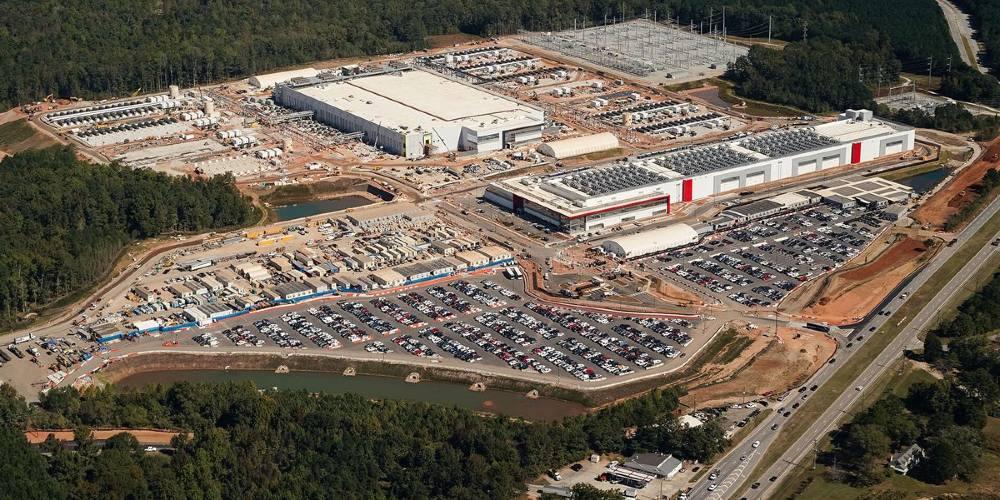
Residents in an affluent Georgia subdivision thought they were doing their part during a statewide drought. They scaled back lawn watering, monitored showers, and heeded official pleas for conservation as wildfires raged.
Then came the revelation: a sprawling data center campus had quietly consumed nearly 30 million gallons of water through unbilled pipes, the equivalent of 44 Olympic-sized swimming pools, with local utilities treating the corporate giant like a favored partner rather than a rule-breaker.
This episode in Fayetteville, just south of Atlanta, exposes a troubling pattern. As Big Tech and private equity pour billions into data centers to power the artificial intelligence boom, everyday Americans bear the costs in strained infrastructure, higher bills, and diminished resources. Local officials, eager for tax revenue, bend rules while preaching sacrifice to citizens. The result is not progress but a stark reminder that when unelected corporations and compliant bureaucrats set priorities, communities pay the price.
The trouble surfaced when homeowners noticed persistently low water pressure. A public records request by local attorney and county candidate James Clifton uncovered the May 2025 letter from the Fayette County Water System demanding payment from QTS. Two massive connections—one installed without utility knowledge, the other unlinked to any account—had funneled vast quantities of water for construction activities including concrete pouring and dust control.
Utility director Vanessa Tigert framed the lapse as a bureaucratic mix-up during a transition to smart meters and a small staff overwhelmed by growth. She emphasized partnership with their “largest customer,” a stance echoed by experts who noted utilities’ reluctance to alienate major revenue sources. QTS maintained the high usage was temporary and that its completed facility will rely on a closed-loop cooling system using minimal domestic water. Yet the optics remain damning: citizens lectured on conservation while corporate operations proceeded unchecked.
This is not an isolated oversight. Across Georgia, data centers have become voracious consumers in a state already navigating water constraints. Similar stories emerge in Newton County, where a Meta facility disrupted nearby private wells, leaving families hauling water and replacing appliances clogged with sediment. Proposals elsewhere threaten to consume millions of gallons daily—volumes rivaling entire towns—often shielded by nondisclosure agreements that limit public scrutiny.
The broader AI-driven boom amplifies these pressures. Projections indicate U.S. data centers could nearly double their electricity demand by 2028, with water needs following suit in humid Southern climates prized for cooling efficiency. Georgia Power’s rates have risen sharply in data-center-heavy areas, prompting the state’s Public Service Commission to freeze base rates through 2028 to shield residential customers. Yet such measures address symptoms, not the underlying reality of elite institutions extracting resources while preaching environmental virtue.
Critics rightly question whether tax incentives and lax oversight truly benefit communities long-term. Short-term revenue gains pale against degraded quality of life, strained utilities, and the moral hazard of two-tiered enforcement—leniency for powerful players, restrictions for families. As one resident put it, citizens feel run over, treated as afterthoughts in their own neighborhoods.
Corporate apologists hail these facilities as economic engines and infrastructure for the digital age. But stewardship demands accountability. When a handful of global firms commandeer public resources during scarcity, it reveals not innovation’s triumph but a failure of governance to protect the common good. Local pushback in Fayetteville offers a model: residents demanding transparency, limits, and fairness over blind accommodation.
In the end, this controversy tests whether prosperity justifies eroding the foundations that sustain ordinary life. The ancient charge to responsible dominion stands in sharp contrast to arrangements that favor the powerful at the expense of the people. Georgia families deserve better than unaccountable thirst in a time of drought.