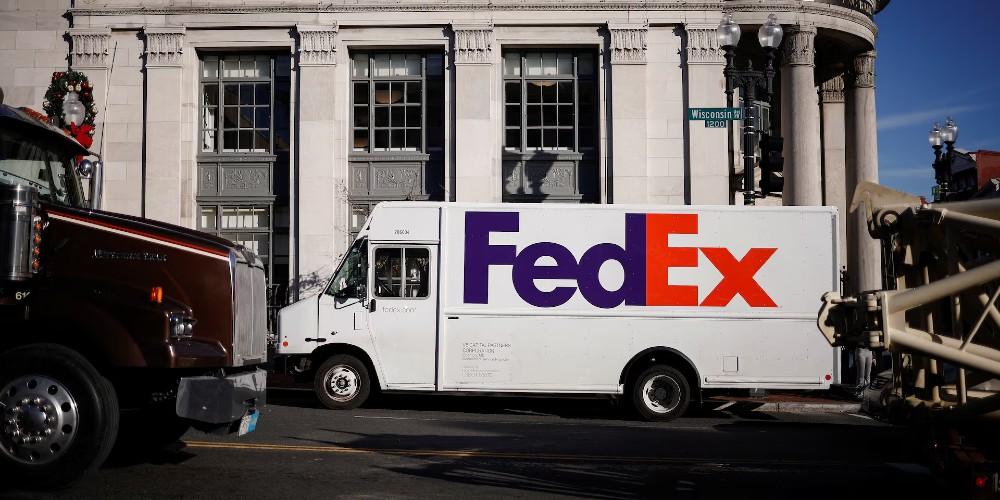
FedEx, the global shipping colossus that moves billions of packages across America and beyond, wasted no time. On Monday, the company marched into the U.S. Court of International Trade and demanded every dollar it paid in tariffs imposed under President Donald Trump’s use of the International Emergency Economic Powers Act.
The lawsuit marks the opening salvo from a major American corporation in what promises to become a sprawling fight over refunds now that the Supreme Court has declared those tariffs unlawful. More than $175 billion in duties flowed into federal coffers from businesses and consumers before the justices drew a firm line. FedEx wants its share back in full, with interest, and compensation for the extra costs it shouldered to keep goods moving.
The story begins in February 2025. Facing what the administration described as persistent national security threats and chronic trade imbalances, President Trump turned to IEEPA—an emergency statute originally designed for sanctions and asset freezes, not broad import taxes. Duties hit imports from China, Canada, and Mexico first. By April, the net had widened to reciprocal tariffs on goods from 57 countries. The goal was straightforward and familiar to any observer of recent American trade policy: force fairer deals, protect domestic industry, and reduce reliance on adversarial supply chains.
Businesses paid the price while the legal challenges played out. FedEx, serving as importer of record for countless shipments funneled through its vast network, absorbed duties directly and passed others along. The company had already signaled the pain in September, projecting up to a $1 billion earnings hit from the full suite of trade measures. Expedited customs processing added yet more expense.
On Friday, the Supreme Court delivered its answer in Learning Resources, Inc. v. Trump. In a 6-3 ruling, the justices held that IEEPA does not authorize the president to impose tariffs. Congress alone holds the constitutional power to lay and collect duties. The court further confirmed that the Court of International Trade holds exclusive jurisdiction over disputes arising from these particular levies. The decision did not address refunds, leaving that question for lower courts to resolve.
FedEx’s complaint wastes no words. “Plaintiffs seek for themselves a full refund from Defendants of all IEEPA duties Plaintiffs have paid to the United States,” it states.
The suit names the United States, Customs and Border Protection, and CBP Commissioner Rodney S. Scott as defendants. It also seeks damages for the financial harm caused by the now-invalid duties, including the added costs of rushing shipments through an uncertain customs environment.
The company’s public statement struck a measured tone focused on customers and compliance. “Supporting our customers as they navigate regulatory changes remains our priority,” FedEx said. It added that it had “taken necessary action to protect the company’s rights as an importer of record” after the Supreme Court ruling, while acknowledging that no formal refund process yet exists. “We will communicate any relevant information and updates in a timely manner.”
Crowell & Moring, the Washington firm handling the case, has already filed similar refund actions on behalf of Costco and Revlon before the high court’s decision. FedEx’s filing elevates the stakes, signaling that major importers intend to test the government’s obligation to return money collected under an authority the Supreme Court has now rejected. Customs and Border Protection, which continued collections throughout the litigation, announced Monday that IEEPA duty intake would cease Tuesday.
This episode lays bare the tension between decisive executive action and constitutional guardrails. President Trump’s tariffs aimed to correct decades of one-sided trade arrangements that hollowed out American manufacturing and enriched foreign competitors. The policy carried real leverage and produced tangible negotiations. Yet the vehicle chosen—an emergency powers law never intended for routine tariff-setting—proved vulnerable. The Supreme Court’s ruling restores a clear boundary: taxes and duties belong to Congress.
As the refund litigation unfolds, the federal government faces an uncomfortable ledger. Billions already collected may need to flow back to importers who, in many cases, passed those costs downstream to American families. The Court of International Trade will now decide the mechanics, the timelines, and the scope of relief. Other companies are almost certain to follow FedEx’s lead.
For now, the case stands as a textbook example of how even the most ambitious trade strategy must ultimately answer to the Constitution. American businesses paid the freight under a policy grounded in legitimate grievances against unfair global commerce. The law has spoken, and the refunds will test whether the system can deliver both accountability and fairness in equal measure.