


In the middle of the night, while most Americans were asleep, the Federal Reserve injected $29.4 billion into the U.S. banking system. It was a “repo operation” — short for repurchase agreement — a mechanism the Fed uses to lend cash to banks in exchange for collateral, usually Treasury securities. The move didn’t make mainstream headlines, but it sent ripples through financial circles. A sudden infusion of this size often signals acute liquidity stress, the kind that central banks are usually desperate to conceal.
The question is: why now?
The banking system has been treading on thin ice for months. Bond markets remain unstable, commercial real estate is imploding, and deposit flight has quietly resumed among regional banks. The Federal Reserve has been walking a tightrope — raising interest rates to fight inflation while trying not to trigger another 2008-style collapse. Yet this $29.4 billion overnight cash injection suggests that pressure inside the system is reaching a point that requires emergency relief.
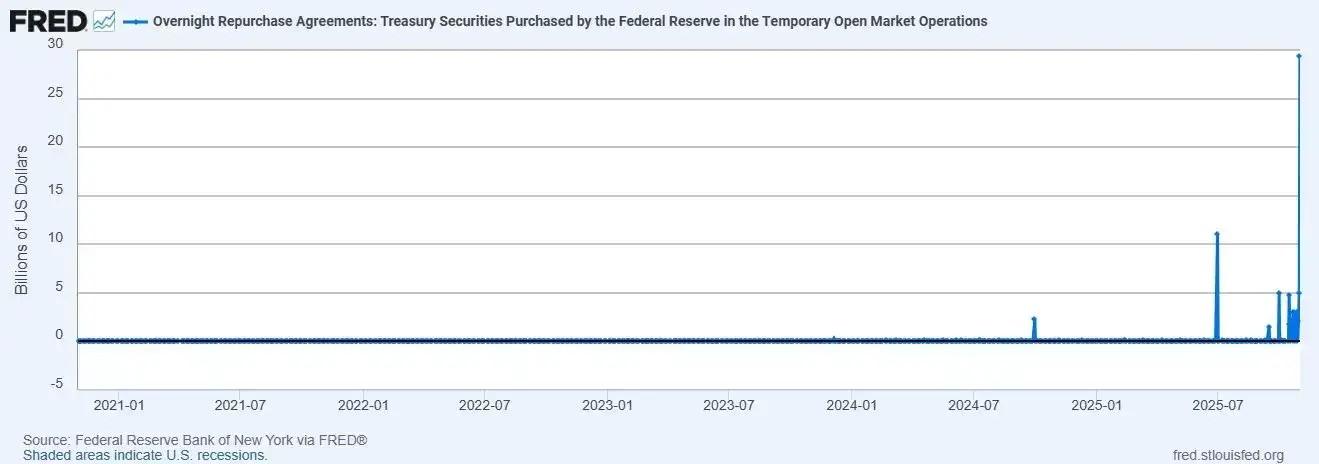
A Return to the 2019 “Repo Crisis”?
The last time the Fed intervened so aggressively in repo markets was September 2019. Then, overnight lending rates between banks suddenly spiked from around 2% to as high as 10%, freezing the interbank market and forcing the Fed to inject hundreds of billions in the months leading up to the pandemic. At the time, officials claimed it was merely a “technical adjustment.” Within months, COVID-19 hit, and the Fed began printing trillions.
The parallels today are hard to ignore. The Fed insists the financial system is “resilient,” yet liquidity injections of this magnitude tell a different story. A healthy banking system doesn’t need an emergency $29 billion cash bath in the middle of the night.
The Hidden Warning Behind “Routine” Liquidity
Officially, repo operations are described as part of “routine monetary management.” But $29.4 billion isn’t routine. The Fed’s own balance sheet data shows that such injections often occur when institutions are short on cash or collateral — in other words, when confidence is eroding.
Banks rely on repos for short-term funding, using Treasuries as collateral to borrow cash. But when rates rise and the value of those Treasuries falls, collateral loses value. That’s the quiet contagion lurking beneath the surface. A single bad auction, a mispriced bond portfolio, or a major commercial real estate default could spark the kind of liquidity squeeze that forces the Fed’s hand.
This latest operation may be the first tremor of something larger.
The Unspoken Role of Global Stress
There’s another layer to this story — one that rarely reaches public discourse. Global liquidity has been deteriorating. Japan’s yen is collapsing, European banks are strained by energy and debt costs, and China’s property bubble continues to deflate. The dollar’s strength, ironically, creates weakness elsewhere. When global institutions face dollar shortages, they sell Treasuries to raise cash, driving yields higher and putting even more stress on U.S. banks holding those bonds.
The Fed’s intervention to end October might have been an attempt to stem that very feedback loop — a short-term patch for a global problem that’s rapidly becoming systemic.
What They Don’t Want You to See
The mainstream financial press tends to bury or ignore these events because they don’t fit the “soft landing” narrative. But beneath the surface, the architecture of modern finance — built on derivatives, leverage, and interconnected balance sheets — is trembling. The Fed is not injecting money because it wants to; it’s doing it because it must.
Liquidity crises don’t announce themselves. They appear in the form of sudden, unexplained actions by central banks — the kind that happen after hours, away from public scrutiny. When the Fed steps in like this, it’s usually trying to prevent a domino effect.
But history shows that such interventions are rarely enough. Every injection of “temporary liquidity” ultimately becomes a precedent for more permanent money creation. It’s how the system perpetuates itself — each bailout breeding the next crisis.
Connecting the Dots
Viewed through the lens of global finance, this $29.4 billion injection isn’t just a number. It’s a signal — one that the credit markets are fracturing and that the illusion of “stability” is cracking. It suggests that, despite record stock prices and political assurances, something deep within the financial machinery has seized.
For those who have been paying attention, the pattern is clear: every major liquidity injection precedes a crisis. It happened before the 2008 collapse, before the pandemic, and now, possibly, before another global financial reset.
The Fed doesn’t panic over nothing.
The public may never know which institution or market was at risk this time. But the move reveals what Based Underground has long argued: that the monetary system itself is artificial, fragile, and dependent on constant intervention from unelected technocrats.
When a system needs $29 billion in overnight oxygen, it’s not healthy — it’s on life support.




Of course, another kosher organization doing harm to the country through their evil machinations. This, of course, will equate to more inflation and higher prices. Good. Let the morons in this country suffer more and more. Let the EBT scum starve quicker. Let the corporations and entertainment industry sink further and further into bankruptcy. They cannot hurt me! I’m already broke with nothing to lose, and I wilL NEVER work or pay taxes again, so FUCK THEM!