(Zero Hedge)—Despite trillions of dollars slated for global data center buildouts, power grid upgrades, and other artificial intelligence infrastructure expansion through the end of the decade, there remains very limited investor discussion about the next-generation physical security architecture required to defend these increasingly critical and high-value infrastructure nodes, including data centers, power plants, and grid transmission chokepoints.
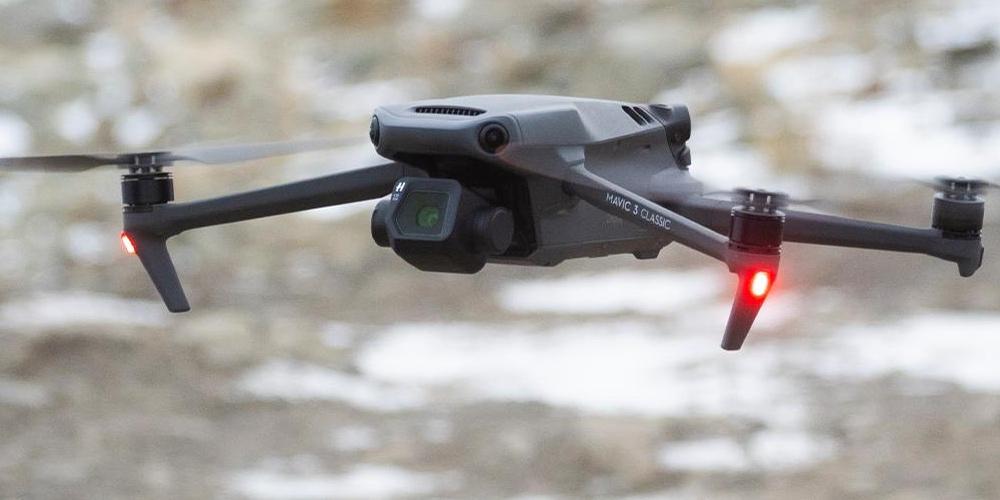
Protection of data centers from suicide drone swarm attacks is currently assessed as a lower risk at the moment, while the Trump administration, particularly following last year’s “Restoring American Airspace Sovereignty” executive order, is primarily focused on counter-UAS measures to secure stadiums and related venues against drone attacks ahead of the 2026 FIFA World Cup.
In recent weeks, U.S. military, federal agencies, and local authorities gathered for a two-day summit near U.S. Northern Command headquarters, bringing together federal agencies, 11 U.S. host committees, and FIFA’s security heads to prepare for matches across the United States, Mexico, and Canada.
“We’re never going to not worry about a dirty bomb,” Miami-Dade County Sheriff Rosanna Cordero-Stutz, who participated in the planning session, told Politico. “But we also recognize that there’s a lot of other things that we need to worry about as well.”
“You can’t just give counter-UAS mitigation equipment to law enforcement that hasn’t learned how to use it yet,” said White House FIFA World Cup Task Force Andrew Giuliani, who coordinated the federal government’s role in tournament preparations and addressed the drone threat at the summit.
Trump’s counter-UAS EO last June, combined with heightened drone-threat concerns ahead of FIFA World Cup events, underscores the urgent need for low-cost, rapidly deployable kinetic interceptor counter-UAS systems that could be repurposed to defend high-value infrastructure and critical assets beyond the soccer tournament.
Beyond the FIFA World Cup and back to the data center buildout story, Morgan Stanley’s Vishwanath Tirupattur forecasts that nearly $3 trillion of global data center spend will occur through 2028, comprising $1.6 trillion on hardware (chips/servers) and $1.3 trillion on building data center infrastructure, including real estate, build costs, and maintenance.
Wall Street analysts largely end their analysis at the financing and construction of next-generation data centers, with limited discussion regarding the modern security architecture required once these facilities are built and become instant high-value targets for non-state actors or foreign adversaries; traditional perimeter measures such as metal chainlink fencing and standard surveillance systems are rendered useless in the world of emerging AI threats, including coordinated autonomous drone or swarm-based attacks enabled by advances in AI and low-cost unmanned systems.
The deployment of low-cost kinetic counter-UAS intercept systems from the US could soon become a reality in Ukraine and be field-tested on the front lines, where tons of operational data would be gathered to help developers refine these systems ahead of future deployment to protect stadiums, data centers, and other high-value assets from drone threats across North America.
Cameron Rowe founded counter-UAS intercept startup Sentradel, which builds autonomous turrets to detect, track, and destroy FPV (first-person view) drones that can be easily modified with explosives. The low-cost interceptor uses a rifle that fires low-cost 5.56 bullets at incoming FPVs, versus current systems that use missiles and may cost tens of thousands per interception, where the economics of war aren’t there.
Meet Sentradel’s low-cost kinetic interceptor counter-UAS system:
There’s growing interest from the Trump administration that these counter-UAS intercept systems will be guarding high-value assets, perhaps not stadiums immediately, but likely data centers in the future, especially as former Google CEO Eric Schmidt recently warned that attacks on data centers are only a matter of time.
Here’s that article from May, 2025:
“Bomb Data Center”: Eric Schmidt Warns AI Arms Race Could Spark Global Conflict
Since Russia’s early 2022 invasion, the all-out war in Ukraine has claimed an estimated one million lives, if not more. Now, President Trump is pushing to broker a peace deal between the two nations in a bid to halt an exploding war cycle and prevent a broader escalation that could spiral into World War III elsewhere around the world.
The world is fracturing into a bipolar state as a global artificial intelligence arms race intensifies, particularly between superpowers like the U.S. and China. President Trump has emphasized that securing hemispheric defense across North America is critical, whether building the ‘Golden Dome‘ or re-shoring critical supply chains, it’s all about preparing for a volatile period in the 2030s.
Former Google CEO Eric Schmidt recently gave a TED Talk, presenting a hypothetical scenario to highlight how geopolitical tensions could accelerate the AI arms race—especially between the U.S. and China. He warned that this race could escalate to include sabotage or even attacks on data centers in the event of a conflict.
Schmidt said that China’s open-source AI development—exemplified by DeepSeek’s breakthrough in efficiency—poses a strategic risk to the U.S., which currently favors closed, tightly controlled AI models. Because China shares its AI advances openly, the U.S. benefits from them but risks falling behind in a global open-source race.
Schmidt said this dynamic could escalate into a new kind of arms race, where the first country to achieve superintelligence gains irreversible dominance due to network effects.
Schmidt warned that if one country falls even slightly ahead, the trailing side may resort to increasingly desperate actions—including sabotage or even preemptive strikes on data centers—to prevent being overtaken.
Schmidt outlined the steps a nation might take if it began falling behind in the AI race:
So what am I going to do? The first thing I’m going to do is try to steal all your code. And you’ve prevented that because you’re good. And you were good.
Second, then I’m going to infiltrate you with humans. Well, you’ve got good protections against that. You know, we don’t have spies. So what do I do? I’m going to go in, and I’m going to change your model. I’m going to modify it. I’m going to actually screw you up to get me so I’m one day ahead of you.
What’s my next choice? Bomb your data center. Now do you think I’m insane? These conversations are occurring around nuclear opponents today in our world. There are legitimate people saying the only solution to this problem is preemption.
Schmidt draws parallels to Cold War-era nuclear deterrence, suggesting that today’s policymakers have not yet developed a framework to manage the geopolitical risks of hyper-AI development. Without such guardrails, the world could face destabilization by the 2030s.
With Schmidt confirming that foreign policy and military circles are already discussing scenarios involving preemptive strikes on critical AI infrastructure—including data centers—Trump’s push for a hemispheric missile defense shield appears to make much more sense now. Relocating data centers deep into America’s Heartland isn’t just about access to cheap energy; it’s also a matter of geographic security, offering far greater protection than vulnerable West or East Coast locations.