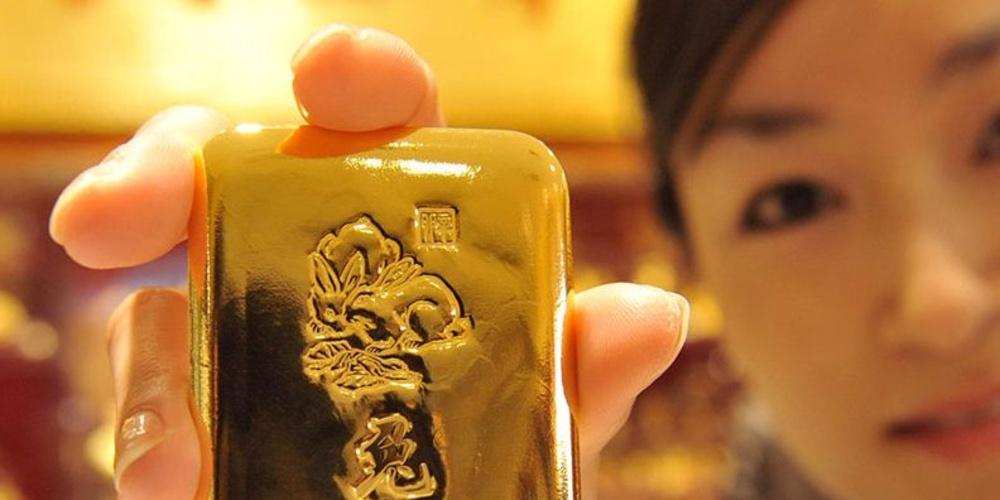
China’s central bank just finished its 23rd consecutive month of gold purchases. In September it added roughly 23 tonnes—about 740,000 ounces—the largest monthly increase in nearly three years. Official holdings now sit near 2,410 tonnes. That is still less than a third of the 8,133 tonnes the United States reports, yet the pattern is clear. Beijing is stacking metal while Washington keeps stacking paper.
Chinese customs data show the country imported more than 1,000 tonnes of gold worth a record $158.8 billion in the first eight months of 2026. That already exceeds the entire 886 tonnes imported in all of 2025. Private demand is part of the story—households fleeing a multi-year property slump and weak returns elsewhere—but the central-bank buying is strategic.
Reports from ZeroHedge and others note that actual purchases may be roughly double what Beijing admits, routed through channels that do not immediately appear on official books.
Why Gold Instead of Treasuries
Two forces drive the shift. First, America’s debt. The national debt crossed $40 trillion in August and stood above $40.3 trillion by mid-October. Interest costs are already measured in the hundreds of billions and climbing. Foreign holders of U.S. Treasuries have watched the pile grow with no serious plan to reverse it.
China’s own Treasury holdings fell to an 18-year low of about $618 billion in July. Gold carries no promise that some future Congress will honor it, and no foreign government can freeze it with a keystroke.
Second is the weaponization of the dollar system. After Russia’s 2022 invasion of Ukraine, Western governments froze roughly $300 billion of Russian central-bank assets. The message was not lost in Beijing or elsewhere. Holding large balances in dollar-denominated securities means those balances can be restricted when Washington decides the politics warrant it.
Julius Baer analyst Carsten Menke told CNBC the motive is political: “the weaponization of the U.S. dollar and the related desire to be less dependent on U.S. Treasuries as a reserve asset.”
Gold offers governments an alternative reserve asset that does not represent another country’s financial liability.
That line from the Money Metals discussion captures the core appeal. Physical gold is not a claim on the U.S. Treasury or any other issuer. It cannot be debased by a vote or a central-bank decision to expand the money supply. Central banks have been net buyers for years; the post-2022 acceleration simply made the trend harder to ignore.
Hong Kong and the Yuan’s Gold Bridge
Beijing is not only accumulating metal. It is building infrastructure so others can use it. Hong Kong has linked gold vaults with Shanghai, expanded storage capacity, and pushed yuan-denominated futures and physical delivery.
The goal is a trading and settlement ecosystem that does not require dollars at every step. If more gold changes hands in yuan, the currency gains a practical use case beyond bilateral trade deals. It will not dethrone the dollar overnight—liquidity, legal systems, and network effects still favor the greenback—but it chips away at the assumption that every serious reserve transaction must clear through the dollar system.
Other central banks have joined the diversification. Poland, India, Turkey, and several others have raised their gold allocations. The common thread is reduced willingness to treat U.S. Treasuries as the default risk-free asset. When the issuer of that asset also controls the payment rails and has shown willingness to freeze foreign reserves, the calculus changes.
What It Means for Americans
The dollar’s reserve status has let Washington run large deficits at lower interest rates than the fiscal numbers alone would justify. Global demand for dollars and Treasuries absorbs the new issuance. If that demand softens over time, borrowing costs rise, the currency faces more downward pressure, and imported goods become more expensive.
A gradual shift produces higher prices and tighter fiscal room. A sudden loss of confidence produces something sharper. Neither outcome is automatic, yet the direction of foreign official buying is no longer a secret.
Gold’s own price has swung. Higher U.S. yields and a stronger dollar have weighed on it at times in 2026, yet Chinese buyers continued adding on the dips. For a central bank with a multi-decade horizon and a desire to reduce counterparty risk, lower prices simply mean more metal per dollar spent. Private Chinese investors have behaved similarly, shifting from jewelry toward bars and coins.
The silver is mine, and the gold is mine, saith the Lord of hosts. Haggai 2:8. Men and nations still treat both as tools of power. China’s accumulation is a rational response to U.S. fiscal path and to the demonstrated ability of dollar sanctions to reach foreign reserves. Americans who assume the reserve privilege is permanent are watching the alternative being built in real time.