Warren Buffett finally said the sentence every public company spends a fortune trying to paper over. Father Time always wins.
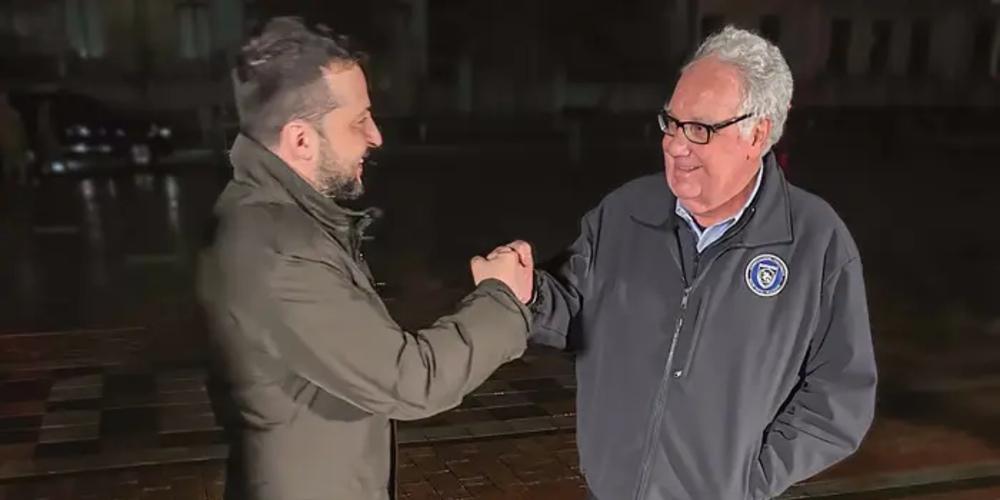
On Friday, Berkshire Hathaway named the 96-year-old chairman emeritus, effective immediately. He stays on the board. His son, Howard G. Buffett, a director since 1993, takes the chair. Susan Decker remains lead independent director. Greg Abel, who already took the CEO job at the start of 2026, keeps running the businesses and allocating the capital. That is the whole map. Operator. Culture guard. Old man still in the room, no longer holding the gavel.
Buffett turned 96 on August 30. In the shareholder letter attached to the Omaha release, he noted that one of his great-grandchildren had just turned one and is moving a bit faster than he is these days. Then he wrote the line that will outlive the press release.
Father Time always wins. He has, however, been generous with me. He has given me the opportunity to see Berkshire reach a point where I am more confident than ever about what lies ahead.
He has served Berkshire since 1965. He has been chairman since 1970. He took a dying New England textile mill and turned it into a conglomerate worth more than a trillion dollars, with Geico, BNSF, Berkshire Hathaway Energy, Dairy Queen, and a stock portfolio that still moves markets when it coughs. Breitbart’s recap of the announcement put his Berkshire fortune above $140 billion as of July, even after decades of gifts. Shares barely flinched. Markets had already priced the handover. This was the last title left to give away.
Abel Runs It. Howard Guards It.
The succession is not improvisation. Buffett stunned the Omaha meeting in May 2025 by saying he would step down as CEO by year-end. Abel took the job January 1. Buffett kept the chair nine more months, watched the new man work, and then closed the circle.
“My expectations for him were sky high from the start, and he has exceeded them,” Buffett wrote of Abel. “He has taken hold of the Chief Executive Officer job in every respect. He has been making the decisions that matter for some time now, and I have not had to think twice about any of them.”
Then the division of labor, stated without consultant English.
Greg runs the company; Howard will guard its culture and values – both worth more than anything on our balance sheet. Think of Howard as a policy the shareholders own and hope never to claim against.
That last sentence is the whole point. Howard is not a second capital allocator. He is not there to chase the hot sector or bless the next ESG scorecard. He has run the Howard G. Buffett Foundation since 1999, spent years as a U.N. goodwill ambassador against hunger, sat on boards from Coca-Cola to ADM, and farmed. His job now is to keep Berkshire from becoming just another publicly traded blob that forgets why it exists. Abel said the same thing in the board’s statement. The culture Warren built stays at the heart of the place, and Howard is its guardian.
So teach us to number our days, that we may apply our hearts unto wisdom.
Most American institutions do the opposite. They number quarters. They hire culture officers instead of keeping a culture. They replace founders with committees and then act shocked when the thing they inherited no longer knows its own name. Buffett did something almost unfashionable. He planned the funeral while he could still attend it.
The Record and the Contradiction
Give the man his due. Compounded returns near 20 percent a year over six decades is not a slogan. It is a verdict on patience, underwriting discipline, and the refusal to buy what you do not understand. Berkshire piled cash when prices were silly and waited.
Under Abel the cash mountain finally started to move. Second-quarter filings showed the first serious net buying after a long stretch of selling, with the Treasury-heavy stash still measured in the hundreds of billions. That pile was not a retreat. It was dry powder. Washington should try the concept sometime.
The contradiction sits right beside the record. Buffett spent years lending his name to the “Buffett Rule,” the Obama-era talking point that the rich do not pay their “fair share.” He co-founded the Giving Pledge with Bill Gates. He has given away tens of billions in Berkshire stock. Then, this summer, he cut the Gates Foundation out of his annual stock gifts for the first time in two decades as the Epstein shadow over Gates refused to fade. He has not spoken to Gates since the controversy blew open. Even a man who spent a generation as a mascot for higher taxes and Davos philanthropy eventually noticed which friends were costing him more than money.
None of that erases the build. It does mean the hagiography should stay in the drawer. Buffett is a Midwestern capitalist who also spent decades flattering the political class that treats capital as a moral defect. The company he leaves behind is stronger than the politics he often endorsed.
What the Chair Is For
Howard has been on the board 33 years. Buffett noted that is a longer apprenticeship than he served before taking the reins at 34. Serving as chairman, he wrote, was the privilege of a lifetime, and he never took the shareholders’ trust for granted. He remains a director. He remains a large voting presence. He is not disappearing into a statue.
The deeper lesson is older than Omaha. A business is not a balance sheet with a logo. It is a set of habits, restraints, and promises that have to be guarded after the founder’s hands slow down. Buffett named a son to do that work and an operator to run the machines. He called the culture more valuable than anything on the books. He is right. The companies that forget it end up with consultants in the boardroom and a mission statement nobody would die to defend.
Father Time always wins. The question is whether anything worth keeping is still standing when he does.