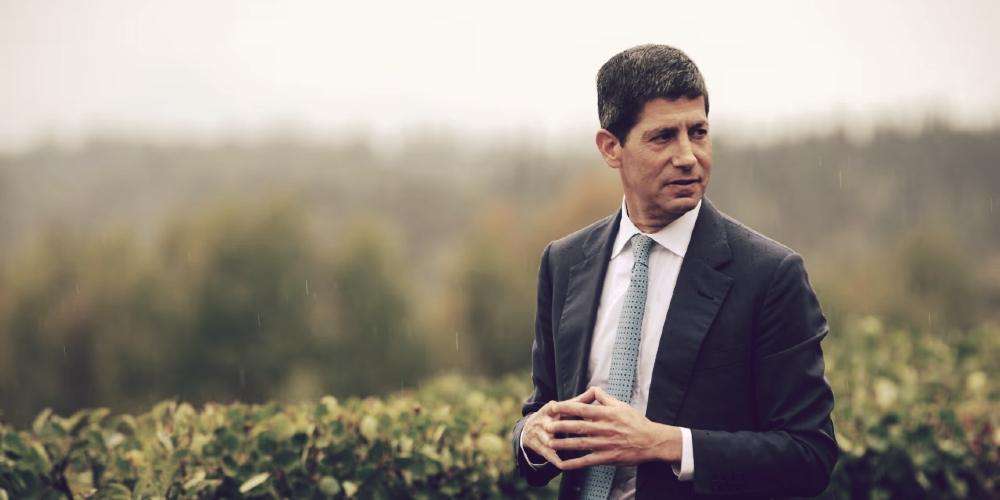
(Just The News)—Americans need a “quieter” Federal Reserve focused on bringing down 65 months of “sustained elevated inflation,” the central bank’s chair told attendees of the annual Jackson Hole Economic Policy Symposium on Friday.
The symposium is a high-profile, once-a-year gathering of leading central bankers, policymakers and economists from around the world. The Fed chair traditionally delivers a closely watched address, often providing insight into the central bank’s economic outlook and policy direction.
While Warsh articulated a broad assessment of the U.S. economy, he was intentionally guarded about the Fed’s upcoming policy decisions, though he did express concern about inflation. The central bank, he argued, has become too accustomed to previewing its policy decisions, fostering an unhealthy dependence on its guidance – which, he explained, needs to be developed in real time and not on “yesterday’s news.”
One of the “innovations” Warsh said he’s introducing at the Fed is changing “the form and function of forward guidance.” Central banks use forward guidance as a way of communicating the “likely future course of monetary policy” to the public, so that individuals and businesses can start making decisions about spending and investments.
But forward guidance as regular practice has “outstayed its welcome,” according to Warsh, even though it was something he and his colleagues found useful in the wake of the 2008 financial crisis.
“In normal times, the role of forward guidance should be limited and circumscribed. Otherwise, it risks creating ambiguity in the name of clarity. Oversharing policy deliberations, overcommitting to future decisions can lead markets, businesses, and households astray,” Warsh said.
To best do its job, the Fed needs to return to a place where sound monetary policy is its highest priority, not constantly signaling its future policy moves, according to Warsh, which he said results in a kind of “hall of mirrors problem.”
“If markets rely materially on the Fed’s guidance, and the Fed relies on market prices, we’re more likely to be blinded to new developments, more likely to be caught unprepared, and more likely to commit errors in policymaking,” he said, with everyday Americans suffering the worst from improper decisions from the central bank.
“Let me see if I can conclude this way. I stand here today committed to a discipline, not a decision,” he said.
As for the economy, Warsh took a generally positive view.
“For my part, today, as we sit here, I’m impressed by the overall performance of the economy, which appears to have strengthened,” Warsh said, noting that the economy has withstood various stresses and shocks fairly well.
He pointed to growing capital expenditures and business profit margins, low equity and market volatility, and high expectations for continued growth. The labor market he described as “quite stable,” where generally, recent graduates can find and hold jobs.
Even in sectors that are facing challenges, Warsh characterized overall financial conditions as favorable.
“Housing and agriculture are showing strains, but on balance, I would be hard pressed to describe broad financial conditions as restrictive,” he said.
When it came to inflation, however, Warsh’s remarks struck a more cautionary tone.
“On the price stability side of our mandate, the numbers are more concerning,” Warsh said.
Inflation is at 3.7%, and the Fed’s target rate is 2%.
“Inflation measures have fallen significantly from their highs of a few years ago, but progress of the last couple of years has been more modest,” Warsh said. “The Fed’s predominant focus right now should be on prices.
“We must be confident that the underlying inflation is moving to our objective clearly and at sufficient speed. Otherwise, we have work to do,” Warsh added. “That’s our mandate, and that’s our charge to keep.”