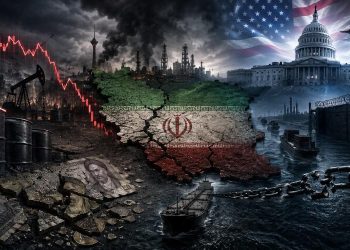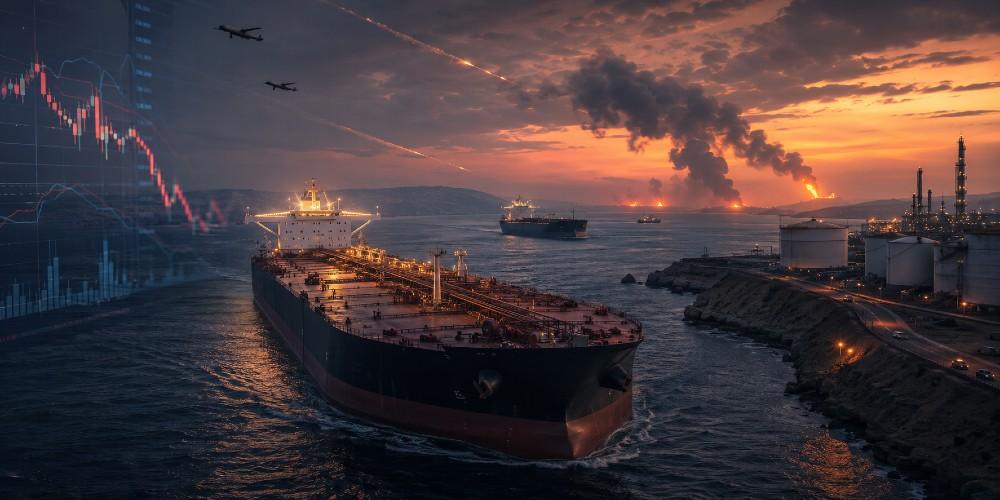
Eleven million barrels a day gone. Strait of Hormuz traffic in freefall. Houthis taking shots at Red Sea shipping. Inventories scraped to record lows. By every rule of the last half-century this should have oil screaming past $150 and staying there.
Instead Brent recently poked above $101 and still sits roughly twenty bucks under its spring wartime highs. WTI did the same. Strategists at JPMorgan are openly puzzled. They expected the pain to fall almost entirely on inventories. What actually happened was the market simply killed demand.
That is not a technical footnote. That is the story.
The Numbers That Should Have Broken the Market
Since the fighting kicked off in late February the world has lost about 11.1 million barrels per day of supply. That is roughly ten percent of global demand vanishing. JPMorgan’s team, led by Natasha Kaneva, notes that inventories have been drawn down to levels that would normally send prices into orbit. They have not.
The International Energy Agency now expects global oil demand to fall by a full one million barrels a day this year. Just weeks earlier they thought the drop would be only 420,000. The latest monthly report shows demand cratered by nearly five million barrels a day year-over-year in the second quarter before beginning a tentative climb. Even with a recovery underway, the annual number stays deeply negative.
The market rebalanced the hard way. It did not wait for inventories to run dry. It crushed consumption first.
China’s Quiet Drawdown Did the Heavy Lifting
The biggest single reason prices stayed contained is China. The world’s largest importer simply stopped buying at anything like its normal pace. Seaborne crude imports plunged. Some estimates put the cut near four or five million barrels a day at the trough.
Beijing drew heavily on the enormous stockpiles it had quietly built before the war. Whether those barrels came from official strategic reserves or the less transparent commercial tanks that nobody outside the Party fully tracks is almost beside the point.
China gave the global system breathing room it did not deserve. While American and European strategic petroleum reserves were being emptied in coordinated releases, Beijing treated its own hoard like a private buffer. The result is a market that looks better supplied on paper than the physical reality justifies.
That buffer is finite. When China decides it needs to refill those tanks, the price will discover how temporary this calm really was.
Demand Destruction Is Not Free
JPMorgan’s strategists call the demand loss “so extraordinary that it naturally invites skepticism.” The global economy was still growing above potential in the first half of the year. Yet oil use fell faster than in any of the past six years outside the pandemic.
Much of the drop hit the petrochemical sector hardest. Plants that turn oil into plastics and chemicals simply shut down or slowed dramatically because feedstock was either unavailable or too expensive. Aviation and road fuel felt it too.
This is not the gentle efficiency gains of electric vehicles or high-speed rail, though those trends in China certainly helped. This is forced rationing dressed up as market adjustment.
People and businesses did not suddenly become more virtuous. They were priced or starved out of the market. That is the kind of “demand destruction” that shows up later as lost jobs, higher grocery bills, and thinner margins for every manufacturer who still needs diesel and jet fuel.
The same left-leaning institutions that spent years cheering the decline of oil demand now get to watch the consequences of their preferred policies colliding with an actual supply shock. They will call it progress. Ordinary families will call it the bill.
American Energy Still Matters More Than Ever
While the Gulf burned and China played its cards close, the United States kept pumping. Record production and emergency releases from the Strategic Petroleum Reserve helped keep the lights on. That is not an accident of geography. It is the direct result of refusing to shut down domestic drilling when the climate lobby demanded it.
Yet even American abundance cannot permanently paper over a world that still depends on a single chokepoint controlled by hostile regimes and their proxies. The Houthis do not need to sink every tanker. They only need to make the insurance and risk premium high enough that the market stays nervous. That nervousness is already back after recent attacks.
Psalm 33:17 reminds us that “An horse is a vain thing for safety: neither shall he deliver any by his great strength.”
The modern equivalent is trusting that distant pipelines, strategic stockpiles, or Chinese inventory decisions will always cushion the next crisis. They will not. Safety belongs to the Lord, and wisdom belongs to the nation that develops its own resources instead of lecturing the world about net-zero while begging for Middle Eastern crude.
The strategists are puzzled because the adjustment came from the demand side instead of the inventory side. The rest of us should not be puzzled at all. When supply vanishes and prices refuse to rise far enough to ration the remaining barrels, something else is being rationed instead. That something is economic activity, industrial capacity, and the quiet prosperity of working people.
The war is still ongoing. The inventories are still low. China still holds the key to the next move. And the only real long-term answer remains the one that does not depend on the goodwill of Tehran, Beijing, or the next ceasefire that lasts until the next missile launch: produce more oil and gas here, refine more of it here, and stop pretending that demand can be wished away without consequences.