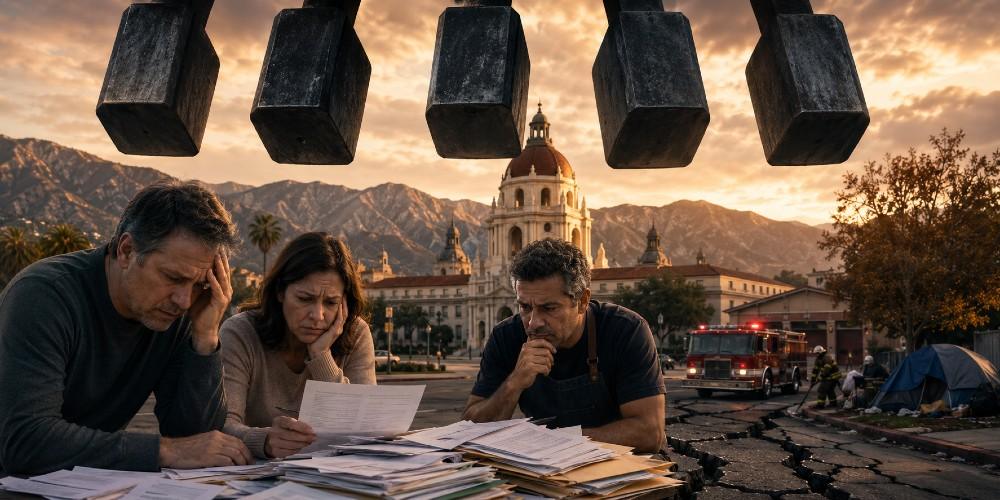
In the shadow of the San Gabriel Mountains, Pasadena stands as a cautionary tale of what happens when local governments prioritize expansive spending over fiscal discipline. City leaders are now floating as many as five new tax measures for the November ballot, claiming a “widening structural deficit” threatens essential services.
Yet this latest push reveals a deeper pattern: years of unchecked growth in government programs, one-time budget gimmicks, and a refusal to confront the root causes of fiscal imbalance.
Rather than trimming waste or reforming inefficient operations, officials plan to ask voters to approve everything from a quarter-cent sales tax hike to a hefty parcel tax on property owners.
The proposals could collectively extract between $5 million and $30 million more annually from residents already grappling with California’s punishing cost of living. This is not mere fiscal housekeeping; it is a symptom of a political culture that views taxpayers as an inexhaustible resource.
According to city finance reports, Pasadena has balanced its General Fund using reserves and one-time funds for three consecutive years. Current projections show revenues growing at 3 to 4 percent annually while expenditures climb between 4 and 6 percent.
Priorities cited include fire station upgrades, wildfire prevention, road repairs, homelessness initiatives, and economic development—laudable goals, perhaps, but ones that demand accountability for how previous dollars have been spent.
The Five Tax Hammers Poised to Fall
City staff presented a menu of options to the council. A quarter-cent local sales tax would generate roughly $11 million yearly, pushing Pasadena’s already high rate even higher after the county’s recent increase. A parcel tax tied to fire protection and roads could hit property owners with up to 24 cents per developed square foot—roughly $384 annually for a median home—potentially raising $30 million. A real property transfer tax on sales might yield $26 million but carries warnings of market disruption and volatility.
Other ideas include a new 10 percent tax on parking transactions for about $5 million and a shift in the business tax structure to gross receipts, which could add $10 million to $15 million. Staff reportedly favor the sales tax for its stability and the parcel tax for its perceived voter appeal when linked to specific services.
These measures arrive against a backdrop of California’s broader tax-and-spend addiction. The state routinely ranks among the worst for business climate and cost of living, driving families and enterprises away. Pasadena’s approach mirrors the state’s: when revenues fail to match ambitions, simply demand more from citizens rather than reforming bloated bureaucracies.
Government Growth Outpacing Reality
Critics rightly note that strong bond ratings and formally balanced budgets mask underlying problems. Relying on one-time fixes has delayed tough choices. Meanwhile, progressive priorities like expansive homelessness programs often yield disappointing results despite significant investment, eroding public trust. Taxpayers see higher costs but not proportional improvements in core services such as public safety and infrastructure.
This cycle echoes a familiar liberal contradiction: expansive government promises more while delivering less efficient outcomes. Cities across California have pursued similar strategies, layering taxes upon taxes without addressing regulatory burdens or spending discipline that stifle economic growth.
Property owners, small businesses, and everyday shoppers would bear the brunt. A sales tax increase hits lower- and middle-income families hardest through everyday purchases. Parcel taxes function as a direct hit on homeownership—the very foundation of stability and wealth-building for many Americans.
Failed Policies Fuel the Crisis
Homelessness initiatives in California have consumed billions with limited success, often prioritizing ideology over practical solutions like treatment and accountability. Road and fire infrastructure needs stem partly from decades of deferred maintenance under shifting political priorities. Instead of confronting these realities, leaders reach again for the taxpayer’s wallet.
Voters must scrutinize not only the proposed taxes but the governance failures that necessitated them. History shows that tax hikes rarely solve structural deficits when spending habits remain unchanged. True reform requires prioritizing core functions, eliminating redundancies, and fostering an environment where private enterprise and individual responsibility can thrive.
As Scripture reminds us in the book of Romans, “Render therefore to all their dues: tribute to whom tribute is due; custom to whom custom; fear to whom fear; honour to whom honour.” (Romans 13:7)
This principle underscores legitimate authority but also implies wise stewardship—governments must not overburden the people they serve nor squander resources entrusted to them.
Pasadena residents face a clear choice in November. Will they endorse yet another round of tax increases, or demand better management of existing funds? California’s cities cannot tax their way to prosperity. The path forward lies in fiscal restraint, accountability, and policies rooted in reality rather than utopian spending dreams.
The council’s deliberations this week may determine whether Pasadena learns from past mistakes or doubles down on them.