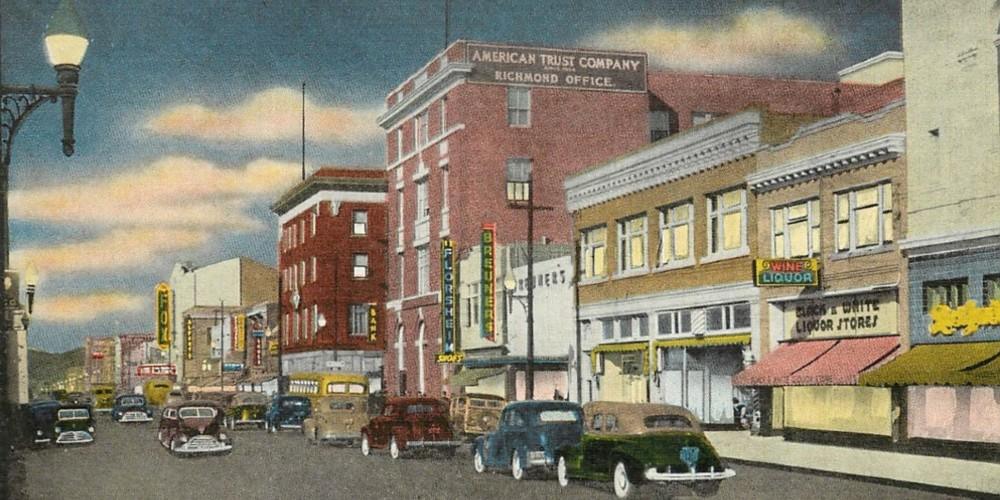
There is a city in the Bay Area where the people who could not remake America have settled for remaking one zip code instead. Richmond, California, a working-class town wedged between a Chevron refinery and the shoreline, has spent more than two decades as a live experiment in what happens when democratic socialists actually get the keys to City Hall. The results, according to the business owners who built something there, are not the worker’s paradise the activists promised. They are an exodus.
The machine behind it all is the Richmond Progressive Alliance, a coalition founded in the early 2000s with the kind of mission statement that ages like milk. Its own website says it formed to challenge corporate power, oppose the Iraq War, and fight for rent control.
Two decades later, the Iraq War is a memory and corporate power is alive and well everywhere else in America, but the RPA has its grip firmly on Richmond’s government, with its council candidates drawing heavy backing from the East Bay chapter of the Democratic Socialists of America.
A Mayor Who Calls Ideology a “Moral Compass”
Mayor Eduardo Martinez is openly affiliated with the DSA and leads a city council that tilts hard in his direction. He has built his tenure on environmental justice and reducing what he calls corporate influence. When Fox News Digital asked him whether ideology drives the city, he did not dodge it the way a more cautious politician might.
“Voters choose representatives whose values and priorities align with their own. Our beliefs serve as a moral compass when making decisions and determining how best to serve our residents.”
That is a remarkable admission, and worth sitting with. The mayor is not claiming to be a neutral administrator balancing competing interests. He is telling residents that a particular worldview is the lens through which every decision gets made, and that this is a feature rather than a bug.
Martinez insists Richmond is not hostile to business, only to those who, in his telling, “have caused harm — or failed to prevent harm” to workers or the environment. The trouble is figuring out who decides what counts as harm, and the answer in Richmond is the people holding the moral compass.
The Liberal Who Got Left Behind
If you want to understand how far a city can drift, find the man who once stood at its leftmost edge and watch the current carry the whole place past him. That man is Tom Butt, the former Richmond mayor and the longest continuously serving member of its city council.
“When I first ran for city council and was elected back in the early 90s, I was considered to be the most, let’s say, the most liberal person on the city council. And since then, if anything, I’ve gotten even more liberal and progressive. But when I left, I wasn’t considered the most conservative person on city council, so I didn’t change that much. But the city council changed dramatically.”
Butt is no conservative convert telling a tidy redemption story. By his own account he moved left over the years, and Richmond still managed to leave him in the dust. He remembers the early RPA members as useful allies on climate and energy. Then, he says, they gained real power in the mid-2010s and pivoted. The friendly coalition became something else.
His verdict on what the city has become is blunt. “It’s not a business-friendly place, it really isn’t,” Butt said. “If you’re in business, you’re pretty much on your own. The city of Richmond’s not going to help you.”
The Winery That Didn’t Survive the Vision
Kevin Brown poured roughly $2 million into turning an old shipyard building into Riggers Loft Wine Company, a waterfront tasting room and event space that pulled visitors from across the Bay Area. He thought he was building something Richmond could point to with pride. After a dispute over deferred COVID-era rent, the city shut him down.
Brown describes the experience as a window into how the city’s leadership actually operates. “We were, in our estimation and the estimation of many other people, a valuable business and kind of a calling card for Richmond, but when the city decided they wanted to change directions, they were just looking for, ‘How do we get rid of them?'”
The city tells a different story, stating that Brown’s company racked up nearly $400,000 in unpaid rent and violated its lease even after receiving pandemic accommodations, and that officials filed two unlawful detainer cases only after multiple attempts at resolution. Readers can weigh the competing accounts. But Brown’s larger point does not hinge on the dollar figure.
“They have a vision and ideology, and it’s full speed ahead. That’s what they’re going to do,” he said. A government convinced of its own righteousness rarely pauses to ask whether the people it is steamrolling might have a point.
The Immigrant Dream Meets the Permit Office
The most damning testimony does not come from a winery owner tangled up in Chevron politics. It comes from 23rd Street, the stretch of Richmond lined with immigrant-owned businesses that the socialist coalition claims to champion.
Raul Ramirez emigrated from Mexico and started with an ice cream cart. He worked his way up to food trucks and finally to Tacos El Rulas, a full-service restaurant that draws diners curious about creations like Mexican sushi. It is precisely the kind of bootstrap success story the left likes to celebrate in the abstract. In practice, his family says, dealing with City Hall is a grind.
“The city council should actually pay attention to small businesses, because that’s the next generation,” said Angel Ramirez, Raul’s son. He claims some applicants paid for permits they never received. “They always say a lot of stuff, but it never really gets done.”
Here is the irony the RPA cannot escape. A movement that brands itself as the defender of the marginalized has produced a permit office that frustrates the very immigrant entrepreneurs it claims to serve. A bureaucracy that takes a man’s money and gives him nothing in return is not serving the poor. It is feeding on them.
The Real Tell
Tom Butt put his finger on what Richmond has actually become, and it is bigger than any single shuttered winery or unanswered permit.
“I think they’re all frustrated that they can’t change the United States to fit their vision of how government should work. But they certainly can do that in Richmond.”
That is the whole project in one sentence. Richmond is a consolation prize for activists who could not win the country, so they conquered a town instead. Martinez naturally rejects the framing, calling his city not an experiment but “a shining example of working people recognizing their ability to govern themselves without being beholden to corporate influence.” He describes Richmond as an “incubator for grassroots democracy.”
Incubators grow things in controlled conditions, sealed off from the outside world. It is a more honest metaphor than the mayor may have intended. The question every American should ask is simple. If this is what the model produces in one small California city, with shuttered businesses, frustrated immigrant families, and a former mayor warning anyone who will listen, why would anyone want it scaled up to the rest of the country?