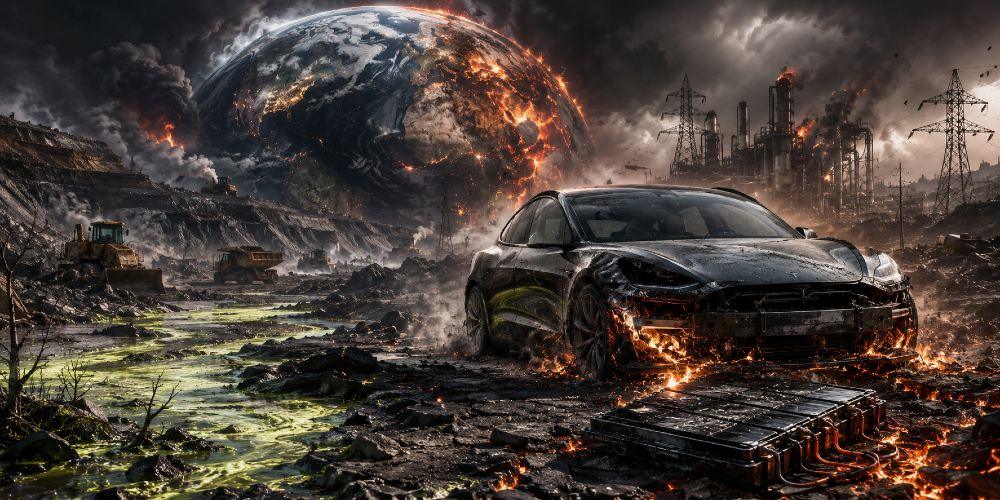
The relentless push by Democrats, global bureaucrats, and climate activists to replace every internal combustion engine vehicle with an electric one promises salvation from the scourge of fossil fuels. Yet the numbers reveal a far darker reality: a wholesale conversion of the world’s 1.5 billion vehicles to EVs would trigger an environmental and humanitarian catastrophe on a scale that dwarfs any problems it claims to solve.
Far from a clean revolution, this agenda exposes the hypocrisy of those who lecture about sustainability while ignoring the raw material realities and human costs involved.
Leaders like Joe Biden set ambitious targets—56 percent of new U.S. car sales electric by 2032—while California’s Gavin Newsom demands 100 percent zero-emission vehicles by 2035. The European Union and United Kingdom have imposed similar deadlines.
These mandates sound virtuous in press releases, but they crumble under scrutiny of geology, economics, and ethics. The Alliance for Automotive Innovation rightly called meeting such goals “a miracle.” In truth, it would be a disaster.
The Mineral Math That Doesn’t Add Up
A typical 75 kWh battery requires roughly 9 kg of lithium, 13 kg of cobalt, and substantial amounts of nickel, manganese, and graphite. Scaled across the global fleet, this translates to millions of metric tons of each material. Confirmed cobalt reserves hover around 11 million metric tons—nowhere near enough for even one full replacement cycle. Lithium reserves face similar pressure, consuming nearly half the known supply before accounting for grid storage or other demands.
While manufacturers pivot toward lithium iron phosphate batteries to dodge cobalt shortages, this shift does not resolve the crisis. It merely relocates dependence: over 98 percent of LFP cathode production occurs in China. What begins as an environmental crusade ends in geopolitical surrender, with Beijing holding the keys to the green future.
The Human and Ecological Toll of Extraction
Before any battery reaches a factory floor, vast tracts of earth must be excavated—estimates range from 91 to over 600 tonnes of rock per battery. Lithium mining consumes enormous water resources: half a million gallons per metric ton. In Chile’s Lithium Triangle, this has already depleted regional water by 65 percent, forcing communities to import supplies and threatening fragile ecosystems.
In Nevada, downstream effects have harmed fish populations miles away. Cobalt mining in the Democratic Republic of Congo brings even graver sins: widespread deforestation, toxic leaching of heavy metals into waterways, and the documented exploitation of 40,000 children.
The U.S. Department of Labor has listed DRC cobalt for child labor concerns since 2009, yet demand surges would only expand this modern slavery. Chinese firms control the majority of these operations, underscoring the moral bankruptcy of outsourcing virtue to authoritarian supply chains.
Nickel production in Indonesia, heavily financed by China, relies on coal-fired facilities carved from rainforests. The very process meant to end fossil fuel dependence is boosting coal use elsewhere. Irony abounds: the EV supply chain and the carbon economy remain inextricably linked.
Upfront Carbon Debt and Grid Realities
Manufacturing a single EV battery emits more than seven tonnes of CO2-equivalent, pushing the total production footprint for an electric vehicle above that of a comparable gasoline model. Across billions of vehicles, this creates a carbon debt equivalent to several months of global energy-sector emissions—all before the cars even roll off the assembly line.
Proponents claim operational savings will offset this, but that assumes clean electricity grids. In China, where much of the world’s EVs and batteries originate, fossil fuels still generate the majority of power. An EV charged on that grid functions, in effect, as a coal vehicle with transmission losses. The fantasy of instant decarbonization ignores these stubborn facts.
Strategic Vulnerability in the Name of Climate Virtue
China processes two-thirds of global lithium, 75 percent of cobalt, and nearly all graphite. Western nations ship raw materials to Beijing for refinement, then buy back finished batteries from firms like CATL and BYD, which dominate the market. This is not diversification; it is dependence by design. Any disruption—export restrictions already tested by Beijing—would paralyze supply chains with no ready alternatives.
Investment in new mining and processing lags, leaving the world unprepared for the scale demanded by political timelines. The result? A policy that weakens national security, enriches adversaries, and inflicts real harm on the planet’s most vulnerable regions and people.
In pursuing this misguided vision, elites reveal a profound disconnect from creation’s order and human dignity. What they market as light—technological salvation—brings shadows of exploitation and ecological ruin.
Prudence demands rejecting top-down mandates that defy material reality. True stewardship of the earth requires honest accounting, not ideological fantasies. Americans and free peoples everywhere should demand policies rooted in innovation, not coercion—policies that respect both God’s creation and the image-bearers tasked with its care.