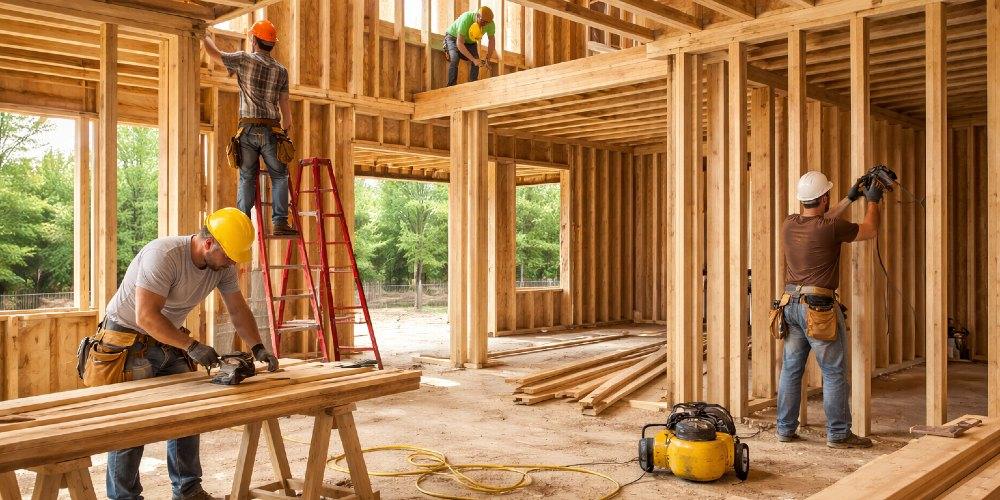
The American dream of homeownership has slipped from the grasp of millions of working families, not because of some inevitable market force, but through decades of government overreach that strangled supply while inflating costs. A new White House report from the Council of Economic Advisers quantifies the crisis starkly: the United States faces a shortage of roughly 10 million homes, a deficit that traces directly to the collapse in construction following the 2008 financial crisis and the regulatory thicket that has since made building prohibitively expensive.
This shortfall did not emerge overnight. Homebuilding and the growth of single-family housing stock plunged after the housing market meltdown fueled by risky lending practices, and never fully recovered. Since 2000, home prices have surged 82 percent while median incomes rose just 12 percent.
Low mortgage rates once papered over the mismatch, but post-pandemic inflation and rising rates exposed the raw reality: for young families and first-time buyers, the door to stability through property ownership has slammed shut.
The report identifies the culprit with refreshing clarity—the “bureaucrat tax.” Layers of zoning restrictions, permitting delays, ever-changing building codes, and compliance mandates tack more than $100,000 onto the cost of a typical new home. These barriers, layered on by local, state, and federal governments, have suppressed construction far below historical norms. Left unchecked, they guarantee higher prices, fewer opportunities for wealth-building through equity, and a slower economy overall.
President Trump’s response, outlined in the report and backed by early executive actions, targets the supply side with precision. Two orders issued in March instruct federal agencies to reduce regulatory burdens and open doors for community banks to issue more mortgages.
The blueprint suggests leveraging federal funding to pressure states and localities into easing zoning and permitting rules—the real choke points in most markets. Additional proposals under discussion, including limits on corporate investors buying up blocks of single-family homes, seek to keep inventory in the hands of actual families rather than hedge funds treating homes as portfolio assets.
Critics on the left have long pushed demand-side gimmicks—subsidies, rent controls, or expansive government building programs—that merely bid up prices further while burdening taxpayers. The Trump approach rejects that failed model. By attacking the artificial scarcity created by bureaucrats, it promises genuine relief: more homes built faster, at lower cost, without sacrificing quality or local control. Early bipartisan housing legislation advancing in Congress, including measures to boost supply, signals that even some across the aisle recognize the urgency.
Yet challenges remain. Mortgage rates have ticked upward amid global tensions, including fallout from conflict in Iran. Trump has openly stated his preference for protecting asset values for existing homeowners—“I don’t want to drive housing prices down. I want to drive housing prices up for people that own their homes”—a stance that balances equity for current owners with opportunity for newcomers. The tension is real, but the path forward lies in expanding supply rather than manipulating demand or punishing success.
Rolling back inefficient mandates from the prior administration offers another lever. Biden-era efficiency standards for air conditioning, water heaters, and ductwork, justified under climate pretexts, added thousands to construction costs with dubious long-term savings for buyers. Industry analyses pegged the added expense at up to $31,000 per home, with payback horizons stretching nearly a century in some cases. Legal challenges have already begun dismantling portions of these rules, freeing builders to focus on affordability over ideology.
The deeper lesson here extends beyond economics. A nation that erects endless barriers to family formation and wealth creation through homeownership undermines its own foundation.
Restoring the American housing market demands more than reports and orders—it requires sustained pressure on entrenched interests that profit from scarcity. If the Trump administration follows through on conditioning federal dollars on measurable deregulation at the state and local levels, and Congress advances complementary reforms, the 10-million-home gap can begin to close. The alternative is continued frustration for millions of young Americans watching the dream recede, while the regulatory state grows ever more entrenched.
The choice is clear: unleash builders or perpetuate barriers. The former honors the principles that built this republic; the latter betrays them.