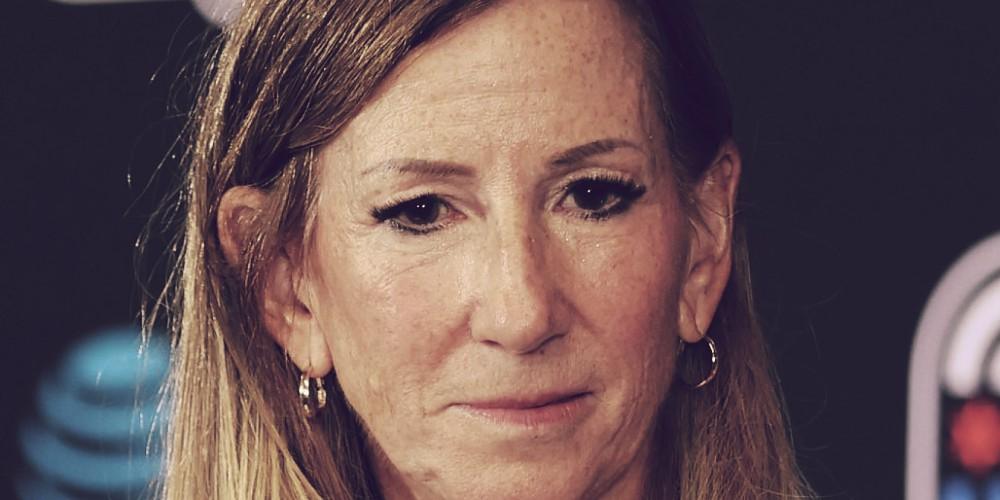
Cathy Engelbert is walking away. Not in the middle of a fire. At the end of the year. After the season. After the victory lap. After the press release that sounds like it was drafted by a consulting firm that still bills by the hour.
The WNBA announced Friday that its first commissioner will retire when the 2026 season is over. Seven years. Two collective bargaining deals. A media-rights package the league now touts at $3.1 billion. Expansion toward 18 teams by 2030. Charter flights. A pandemic bubble. All the numbers the office loves to recite.
Adam Silver called it the most significant growth period in the league’s 30-year history. Engelbert said she always planned on three and a half years and simply stayed longer. She told the Associated Press she felt no pressure from owners. Of course she did.
I retire knowing we have built something bigger, stronger and more enduring than we could have imagined.
That is the official line. The unofficial line has been hanging in the air for a year. Players called her leadership the worst in the world. Fans booed her when she held a microphone. Congress wrote her a letter. A television host waited two hours for an interview her public-relations staff canceled. And when two former NBA players said they would enter the women’s draft, she answered with a memo about “nuance.”
The money got bigger. The trust did not.
The Boom and the Woman Who Would Not Credit It
Nobody serious pretends the WNBA of 2019 is the WNBA of 2026. Attendance jumped. Valuations jumped. Salaries finally cracked seven figures under the new CBA. That is real.
What is also real is who pulled the camera toward the product. Caitlin Clark walked in from Iowa and the country started watching. The league spent the next two seasons acting like that was a problem to be managed instead of a gift to be protected.
Last fall Minnesota Lynx star Napheesa Collier stood at a microphone and said the quiet part. She called Engelbert negligent. She said the league had “the worst leadership in the world.” She described a private conversation in which Engelbert allegedly told her that only losers complain about the officials, that Clark should be grateful for $16 million off the court, and that players should be on their knees thanking their lucky stars for the media deal.
Engelbert said she was “disheartened” by how those talks were characterized. The locker room mostly sided with Collier. OutKick carried the blast when it landed.
That is not a personality clash. That is a commissioner talking about the one player who actually moved the needle as if the league had done her a favor by letting her exist.
The officials kept missing the cheap shots. Clark got hip-checked, poked, and punched in the throat. House Republicans wrote Engelbert and asked why the face of the league was being treated like a tackling dummy. Her answer was process language. Reviews after every game. Separate basketball-ops and referee-ops tracks. Health and safety as a “top priority.” August Pfluger said the response fell short. It did.
Adam Silver had to lean in when Alyssa Thomas caught Clark in the neck. That is what happens when the person in the chair cannot make the hard call without the boss downstairs.
A League That Forgot What a Woman Is
Engelbert came from Deloitte. She talks like it. Strategy. Hypergrowth. Stakeholders. The next 30 years are about scaling the game. Fine. A commissioner still has to know what the product is.
This summer Enes Kanter Freedom and Royce White said they would declare for the 2027 WNBA Draft. The point was obvious. If the rules cannot say what a woman is, the rules are a suggestion. Engelbert sent teams a letter calling the debate “complex and nuanced” and promising more listening sessions. Then she stood in Dallas and accused outsiders of using the league to “sow divisiveness.”
OutKick published the memo. The people “sowing divisiveness” were the ones asking a women’s league to remain a women’s league.
Sophie Cunningham said out loud that she wanted to protect young girls in a locker room. Indiana’s own guard. The commissioner treated that as a branding headache. Cunningham later suggested the commissioner’s chair might be open at year’s end and that the job needs someone bold who wants the best for the players, not for herself. The New York Post ran it. Engelbert’s contract was already set to expire. The calendar did the rest.
Ye shall know them by their fruits. Every good tree bringeth forth good fruit, but a corrupt tree bringeth forth evil fruit.
The fruit of this tenure is a richer league that still cannot tell the truth about sex, still cannot keep its biggest draw from getting clobbered, and still treats ordinary fans as a problem when they notice.
Retirement on Her Terms, After the Questions Would Not Stop
All year she dodged the 2027 question. At the draft she wondered whether a reporter would ask a man the same thing. At All-Star weekend she talked about being “so blessed” and kept moving. Fox News noted the dodge. The Post kept asking whether she was the right person for the next chapter. Silver kept praising the results and refusing to lock her in.
She canceled on Dan Patrick at a golf tournament while the Clark mess was boiling. PR said she was not allowed to sit. Then the cameras found her on the tee box. That is not a coincidence. That is a shop that would rather play celebrity golf than answer for the product.
Now the statement writes itself. Gratitude. Optimism. The best yet to come. She says a succession plan has been in the works and that internal and external names are on the radar. Whoever takes the chair will still report to Silver. That part will not change.
What should change is the reflex. Stop treating the women who pack the buildings as a political project. Stop sneering at the fans who showed up because a shooter from Iowa made the game matter. Stop hiding behind “nuance” when a child can tell you what a woman is. Pay the players what the market will bear. Call the fouls. Protect the stars. Preach less. Officiate more.
Engelbert will leave with the spreadsheet looking better than the one she inherited. Give her that. The league she hands off is louder, richer, and more famous. It is also more brittle, more political, and less sure of its own name.
That is not a cultural surge. That is a warning label. The next commissioner can cash the checks Clark helped write, or she can keep pretending the money arrived because the mission statement was righteous. Only one of those stories is true.