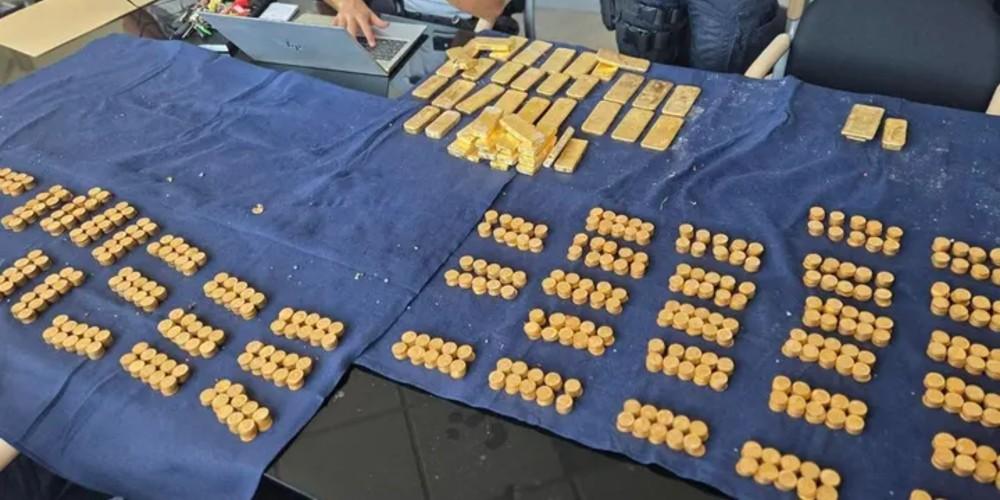
Construction workers in a quiet Flemish town just struck pure gold while digging a sewer. Not figurative gold. Actual gold. Coins and bars worth more than ten million dollars, sealed inside a cellar wall of a former brewery like some old-world secret waiting for the right shovel.
Most modern people would have pocketed what they could and kept quiet. These men did the opposite.
According to Fox News, the crew was renovating a property in Sint-Gillis-Dendermonde, about thirty kilometers outside Brussels, when they removed a section of foundation to lay sewer pipe. An eighteen-year-old summer worker named Kobe spotted what looked like ordinary one-euro coins. Then they found a gold bar. Then more bars. Then thousands of coins.
The haul, estimated at roughly nine million euros, included more than forty numbered gold bars and over four thousand gold sovereigns. The treasure had been deliberately bricked into the wall of a cellar beneath the grand villa once belonging to brewery owner Theophilus Van Assche.
Kobe’s first reaction was pure disbelief. “Our first reaction was actually disbelief, surprise. Of course, we didn’t expect to find gold,” he told Belgian media.
Site manager Mario described the moment the crew started yelling. “They shouted, ‘We found gold.’ I went to look and took the gold in my hands. We also continued to dig up new coins and bars. Only then did what we had found really dawn.”
They called the police. Immediately. The gold was catalogued and locked in a high-security federal vault. Under Belgian law the original owner has five years to claim it. If no one steps forward, the find is typically split between the discoverers and the landowner.
The current owner is CAW Oost-Vlaanderen, a welfare organization that took over the property to turn it into offices and housing for people in need. Its director has already said he hopes the money can help meet “the enormous need we experience daily.”
That hope sits against a darker modern backdrop. In an age when people loot stores, claim victimhood as a profession, and treat other people’s property as communal property, these workers chose the harder path. Mario put it plainly when asked if they considered keeping the fortune: “It’s about so many coins and bars, that almost wouldn’t be possible. Besides, it would also be theft.”
Kobe still hopes for a finder’s fee. “That would be nice.” Fair enough. But the more important detail is what they refused to do.
Local historian and former mayor Piet Buyse believes the gold almost certainly belonged to the Van Assche family. The brewery operated from 1899 until 1970. The children never married. The estate eventually passed to monks on the condition it serve a good purpose, and from there it reached the welfare group. The family had converted wealth into gold after hard lessons from earlier economic crashes. Someone decided the safest place for that gold was inside the walls of the family home itself.
Now the walls have given it back.
Police have already warned treasure hunters to stay away. The site is fenced, the gold is gone, and the pits are dangerous. The real story is not the metal. It is the men who found it and still understood the difference between discovery and theft.
Scripture speaks to this kind of moment with quiet force. Romans 12:17 declares, “Recompense to no man evil for evil. Provide things honest in the sight of all men.” These workers did exactly that while standing in a hole meant for sewage. In a culture that often celebrates the opposite, their simple decision carries more weight than the gold itself.
Whether the fortune ultimately helps the needy, returns to some forgotten heir, or is divided under Belgian law, the first and best decision has already been made. The men who found the treasure refused to become thieves. That alone is rarer than any bar of gold.