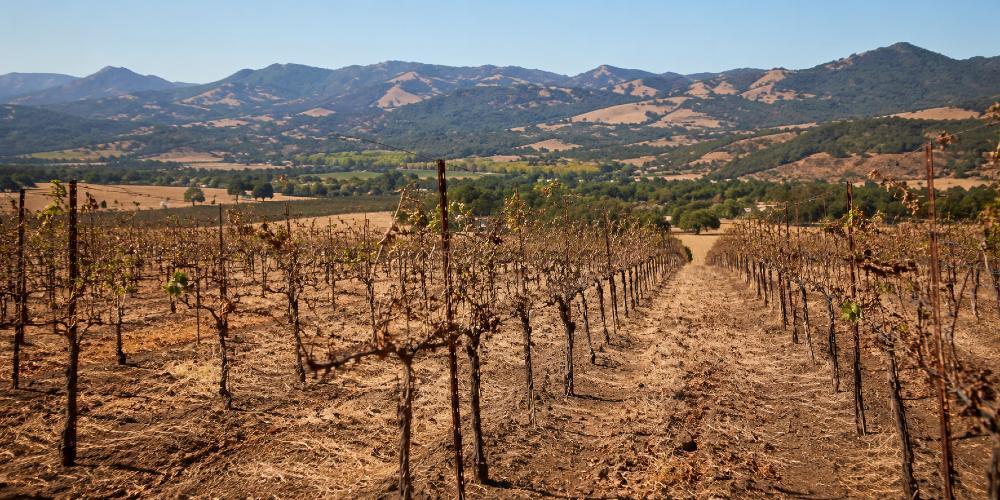
Napa Valley stands as a crown jewel of American agriculture, its sun-drenched hills and meticulously tended vines producing some of the world’s most celebrated wines. Yet beneath this prestige lies a growing crisis: the region is pumping groundwater at unsustainable levels, even as regulators pile on costs that make viability increasingly difficult.
Experts warn that without meaningful change, Napa’s wine industry risks a slow wither, not from some abstract climate apocalypse, but from a toxic mix of poor resource management and self-defeating government intervention.
This overpumping is no temporary hiccup. For years, Napa County has missed its own groundwater sustainability targets, triggering an “undesirable result” under the state’s plan. Rainfall in 2025 fell short of averages, but the real issue runs deeper than weather.
Decades of intensive agriculture, combined with policies that discourage practical adaptation, have strained the aquifer. The county now eyes updates to its Water Availability Analysis and incentives for conservation, yet reliance on voluntary measures raises questions about whether officials truly grasp the urgency.
Meanwhile, the broader industry faces headwinds that water shortages only intensify. Wine consumption trends downward as older enthusiasts age out and younger adults opt for other beverages. Vineyards grapple with massive oversupply in some regions, leading to unharvested grapes and even removals of vineyard acreage.
In Napa, the prestige remains, but the economics do not. One study revealed that regulatory red tape alone can cost a 1,000-acre operation nearly $1.7 million yearly. These are not abstract burdens — they represent real dollars diverted from innovation, jobs, and stewardship.
The Cost of Bureaucracy in Wine Country
California’s layered regulations — federal, state, and local — create a compliance maze that punishes the very producers who generate economic value and tax revenue. From environmental reviews to water restrictions and labor rules, the cumulative weight threatens the agricultural preserve that defines Napa.
As one industry leader noted, without reform, “we might not have viable agriculture as we know it.” The irony is thick: a region famous for its natural beauty and entrepreneurial spirit finds itself strangled by the very government that claims to protect it.
Critics rightly point out that California’s approach often prioritizes symbolism over substance. While the state touts ambitious water plans, local realities show continued overuse. Voluntary programs sound cooperative, but history suggests they rarely deliver the structural changes needed. Napa’s small size — roughly 45,000 acres and just 4% of statewide production — underscores how concentrated policy failures can undermine a globally recognized brand.
Producers have adapted before, adopting efficient irrigation and sustainable practices. Yet when government demands consume double-digit percentages of operating costs, even the most dedicated stewards face limits. The decline in demand only heightens the pressure: fewer buyers mean thinner margins, making every acre-foot of water and every compliance dollar more precious.
Lessons from History and Principle
This crisis invites reflection on deeper truths. Human flourishing has always depended on wise dominion over creation — balancing use with renewal, innovation with restraint. When policies favor ideology over practicality, they risk undermining the very enterprises that feed, clothe, and delight communities. Napa’s story echoes broader patterns where centralized mandates ignore local conditions and human ingenuity.
As the Apostle Paul reminded the church in Corinth amid their trials, “God is faithful, who will not suffer you to be tempted above that ye are able; but will with the temptation also make a way to escape, that ye may be able to bear it” (1 Corinthians 10:13). In the face of resource challenges, faithful stewardship — not bureaucratic overreach — points the path forward.
County leaders now seek industry input on conservation. That dialogue must include honest assessment of regulations that drive up costs without delivering proportional environmental gains. Incentives to let land rest and recharge aquifers make sense, as do technologies that stretch every drop further. But without addressing the regulatory overload and declining markets, water fixes alone may prove insufficient.
Napa Valley’s future need not be one of managed decline. With sound policy that respects property rights, encourages innovation, and lightens the bureaucratic load, this iconic region can remain a testament to American enterprise and natural bounty for generations to come. The question is whether decision-makers will choose adaptation rooted in reality or continue down the path of unsustainability.