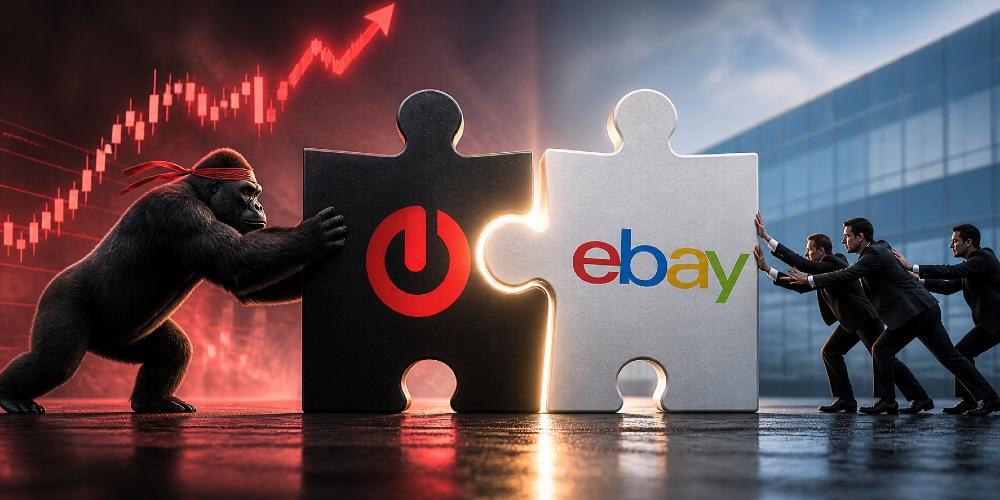
Ryan Cohen, the activist investor and GameStop CEO who helped turn a fading video game retailer into a cultural phenomenon during the meme-stock era, has now placed one of the boldest bets in modern corporate America. GameStop has formally proposed acquiring eBay for approximately $56 billion in a cash-and-stock deal, offering $125 per share—a 20% premium over eBay’s recent closing price.
This unsolicited move signals Cohen’s vision of forging a retail powerhouse capable of rivaling Amazon, leveraging GameStop’s physical footprint and massive cash reserves to revitalize eBay’s stagnant marketplace.
Far from a simple merger, this proposal exposes deep frustrations with Big Tech’s stranglehold on online commerce. While Amazon dominates seamless, algorithm-driven retail, eBay has languished with flat user growth despite heavy marketing spend. Cohen aims to change that by slashing $2 billion in annual costs, integrating GameStop’s 1,600 U.S. stores for authentication, fulfillment, and live commerce, and building a true competitor that values sellers and collectors rather than endless data harvesting.
Critics will scoff at the size disparity: a company valued around $12 billion bidding for one four times larger. Yet Cohen’s track record with Chewy, which he grew into a billion-dollar e-commerce success before selling, suggests this is no mere meme-fueled fantasy. He sees untapped potential in eBay’s near-universal brand recognition, arguing that bloated spending has failed to deliver buyer growth.
By redirecting resources and adding tangible retail touchpoints, the combined entity could authenticate collectibles, facilitate in-store drop-offs, and create experiences Amazon’s warehouses cannot match.
This bid also highlights a broader truth about American enterprise. Legacy institutions like eBay have grown complacent under layers of corporate bureaucracy and progressive management priorities that prioritize metrics over markets. Cohen’s approach—lean operations, customer focus, and bold capital allocation—embodies the disruptive spirit that built this nation’s economy. In an age where government-favored tech giants squeeze out smaller players, a revitalized GameStop-eBay duo could restore competition and choice for everyday sellers and buyers.
Of course, significant hurdles remain. Regulatory scrutiny, shareholder approval, and integration challenges could derail the plan. eBay’s board may dismiss the offer outright, prompting Cohen to take his case directly to investors. Yet the mere announcement has already unlocked value, with shares jumping and markets signaling openness to fresh thinking in retail.
History shows that underdogs armed with vision and discipline can upend giants. Cohen’s willingness to bet big reflects a confidence in free markets that many in elite boardrooms have abandoned. As believers in stewardship and diligence, we are reminded that bold, principled action often yields fruit.
In the end, this isn’t just about video games or online auctions. It’s about whether American capitalism can still reward entrepreneurs who dare to build rather than merely manage decline. Cohen’s move may prove that the spirit of enterprise remains alive—even in surprising places.